Browsing: Essays

Blog Posts

0

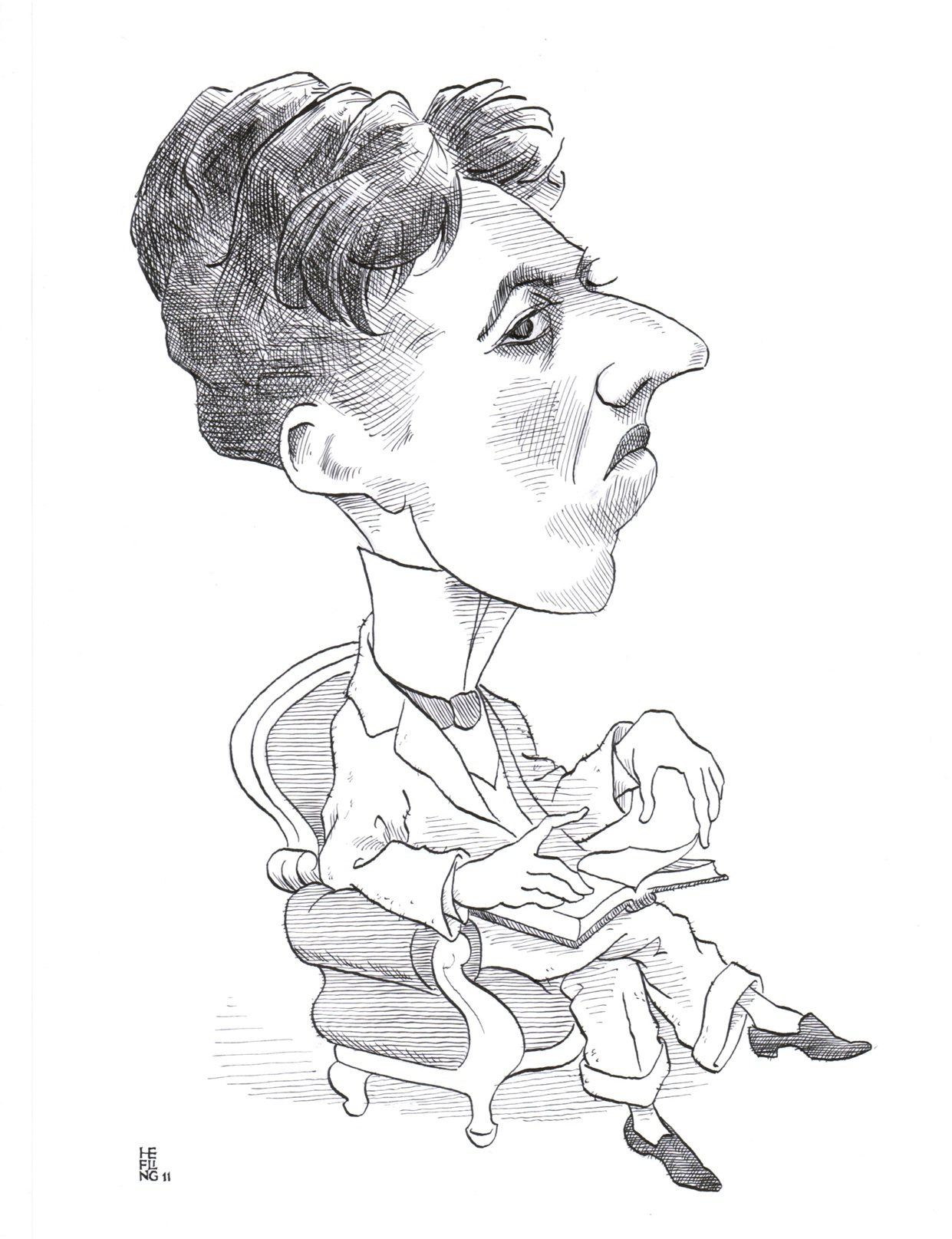
THE FACT THAT Ronald Firbank was an innovator in his medium, that he was a humorous commentator on social mores, has long been recognized. That his novels are wise as well as witty has not been generally acknowledged, a fact that may be due to the strong influence of Oscar Wilde upon his work. However, as literary and cultural criticism has come increasingly to appreciate Wilde as a major writer and as a prophet of our age, Firbank’s fortunes have risen accordingly.

More
0

SAN FRANCISCO, APRIL, 1983. In one of the earliest spoken-word performances that theatrically represented AIDS in the United States, perhaps the first on the West Coast, an emerging playwright and stand-up comedian named Doug Holsclaw performed Eartha at the White House (later retitled Spice Queen) in a monologue competition sponsored by the One Act Theater Company at a county fair. Holsclaw wrote the piece after reading Larry Kramer’s impassioned call to action “1,112 and Counting,” which had been published in The New York Native on March 12. In an impeccably timed, angry, campy yet earnest soliloquy, Holsclaw’s saucy character narrated a story about his friend Jeffrey, a hustler who had died at a young age during the first year of the crisis. Describing their catty yet tender friendship, Holsclaw’s character joked about how Jeffrey, who “could be Cruella Deville sometimes,” would call him “paprika queen” or “Donna Reed like I’m bourgeois—because I garnish my salads” when they would picnic at Land’s End on Memorial Day. Pausing artfully for both comedic and dramatic effect…

More

0

IN OCTOBER 2010, the Smithsonian Institution corrected a decades-long oversight by staging the first major museum exhibition focused on GLBT American figurative art. Hide/Seek: Difference and Desire in American Portraiture, at the National Portrait Gallery, met with critical acclaim and enthusiastic attendance—as well as an explosive controversy worthy of the “culture wars” of the late 1980’s. When reactionary forces demanded the removal of David Wojnarowicz’s video “A Fire in My Belly”—and when the demand was met—many people were reminded of the controversy around a Robert Mapplethorpe retrospective in 1989 and the Corcoran Gallery of Art’s decision to cancel the exhibit …

More
0

The following text is drawn from the catalog for an art exhibit called Graphic Intervention: 25 Years of International AIDS Awareness Posters: 1985–2010, which ran at the Massachusetts College of Art and Design in Boston last fall. The international poster collection of James Lapides formed the basis for the exhibit; several of the 153 posters that were on display are shown here.

More
0

WHEN Carolyn Forché released her groundbreaking anthology Against Forgetting: Twentieth Century Poetry of Witness, she did not include poems from the struggle for gay rights. The anthology was published in 1993, a bleak point in the history of the gay community due to the impact of AIDS on gay men and on the arts community. But, as readers today, we can easily situate AIDS poets in the panoply of poets of witness—those who write poetry that transcends the purely personal or the purely political and operates at their intersection. This is a type of poetry that exists in a space of resistance and re-orients points of view toward new ways of seeing and speaking. As a critical lens for understanding the cultural impact of poetry, Forché establishes an especially fruitful way of seeing poetry responding to AIDS.

More
0

I STARTED TEACHING courses on hiv/aids literature to undergraduates after spending more than five years researching the subject for my doctorate. The period in which I initially sought out and devoured any and all types of “AIDS literature” was uneven enough. During my first year as a graduate student, 1990–91, it felt like a narrowly delimited topic with a few score works of creative literature in all genres, and just a handful with substantial literary interest.

More
0

HOW DOES one tell the story of Sergey Pavlovich Diaghilev, the impresario whose artistic accomplishments over three decades beginning at the turn of the 20th century seem to surpass what is humanly possible? How did this homosexual Russian émigré who spent the majority of his life exiled in Europe do it?

More
0

NEARLY 200 YEARS AGO, the French novelist Honoré de Balzac created a remarkable character, Vautrin, a charming, hyper-masculine master criminal, and a man who loves men. In three of Balzac’s most popular novels, an important part of the plot turns on Vautrin’s love for an exceptionally handsome, much younger man …

More
0

GEORGE GORDON, LORD BYRON (1788–1824) was the reigning male sex symbol of the early 19th century. His sporadic personal beauty (alternating between plumpness and emaciation), his flamboyant lifestyle, and his real and imagined affairs with women all fed the image. But Byron’s love life also included males. His bisexuality was known, not only within his own close circle, but “on the street.”

More
0

THE “REVULSION LETTER” is on its way to the Supreme Court. Triggered by gay and lesbian Americans picketing the White House in 1965, and hidden away in the attic of pioneer gay civil rights activist Frank Kameny until he donated it to the Library of Congress in 2006, this single-spaced, three-page letter established a viciously discriminatory federal policy toward homosexuals that lasted for decades.

More
1 48 49 50 51 52 76