

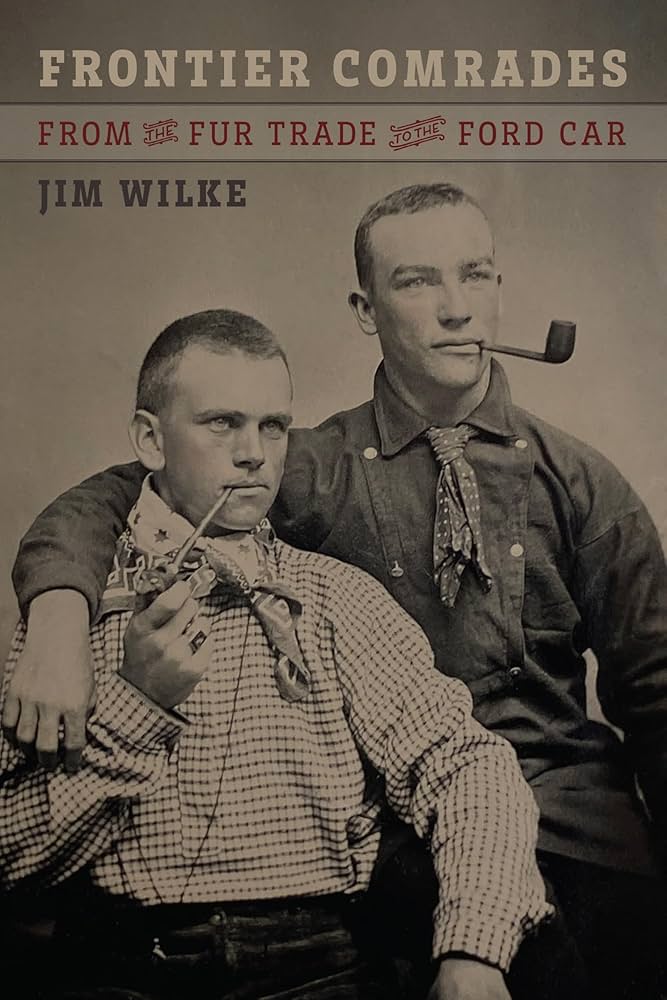
 FRONTIER COMRADES
From the Fur Trade to the Ford Car
by Jim Wilke
University of Nebraska Press
302 pages, $27.95
LIKE MANY YOUNG, gay American boys in the 1950s and ’60s, I grew up watching Gunsmoke, The Rifleman, Have Gun—Will Travel, and other television fictions about the American West. It was depicted as a hypermasculine era of long, torturous treks by wagon train, shoot-outs in the dusty streets, sudden fortunes unearthed during the Gold Rush, rambunctious carousers in the saloons-cum-brothels—when men were men and women were … scarce. As I grew into my sexuality, I sometimes wondered if any of those cowboys, settlers, miners, railroad-layers, and cavalrymen were gay, bisexual, or even transgender, and, if so, whether they managed to live freely and happily. We never saw their stories in the typical western.
Jim Wilke’s new book, Frontier Comrades: From the Fur Trade to the Ford Car, tells some of those overlooked stories.
Wilke is quick to point out that in 19th-century America there was no sense of a “gay identity.” None of the men and women he writes about would have recognized the labels that would come later. And yet, many LGBT folks lived on their own terms, relatively open about their sexuality. Wilke explains that in the logging camps and mining towns, and on long cattle drives, amid the harsh realities of the unforgiving environments traversed, most of the niceties of eastern society were necessarily put aside. He quotes sexologist Alfred Kinsey: “There is a fair amount of sexual contact among older males in Western rural areas … ranchmen, cattle men, prospectors, lumbermen. … Such a group of hard-riding, hard-hitting, assertive males would not tolerate the affections of some city [homosexuals]; but this, as far as they can see, has little to do with the question of having sexual relations with other males.” Thus, young British adventurer William Stewart openly shared his tent (and bed) with other, favored men on his buffalo hunts across the prairies; William Breakenridge, sheriff of Tombstone, consistently opened his arms to a young Vanderbilt and a local cattle rustler. Neither was ostracized; in fact, they were well-respected among their comrades.
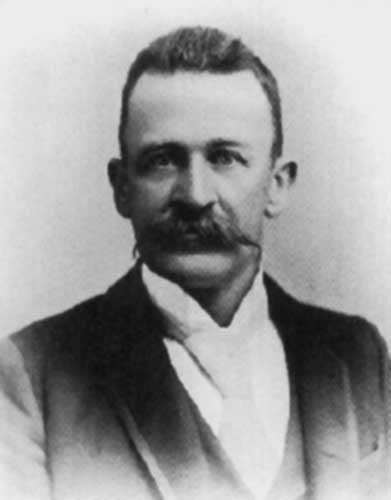
The “lady lovers,” so termed by The Denver Times, were less fortunate. Ora Chatfield, the daughter of a prominent family in Aspen commerce and politics, was groomed for “a world of virtue and duty within a vast interlocking network of social mores and courtesies … alongside an appropriate husband [to]continue to carry the magnificent torch of Victorian civilization.” Clara Dietrich, the 26-year-old unmarried postmistress of Emma, just north of Aspen, was connected through marriage to the Chatfield family, securing her place in Aspen society. Living together in a Chatfield-owned house, Ora and Clara developed a “grand passion” for each other. The Chatfields objected to the pair’s love and separated them. After weeks of corresponding in secret, the two lovers “eloped” to Kansas City, Missouri. However, the Chatfield family tracked them down and returned Ora to family life in Aspen, forcing her into a “remedial marriage” to an Aspen businessman.
Wilke also tells of Charley Parkhurst, a stagecoach driver with a tremendous reputation for fast, safe delivery of passengers to their destinations and for mapping out new stagecoach routes. Although some of Parkhurst’s acquaintances suspected something odd, Charley lived as a woman for many years without detection. Similarly, Mrs. Noonan (I can find no first name), a laundress with the Seventh Cavalry (Custer’s command) who wore a green scarf covering the lower part of her face, approached the commander and asked to be allowed to ride in a wagon with supplies and provisions rather than in the same wagon as the other laundresses. The commander, getting a glimpse of Noonan’s stubbled chin, recognized that Mrs. Noonan was a man, but for the sake of troop cohesion and to avoid scandal, the commander never mentioned Noonan’s secret. She went on to become the housekeeper and laundress for Custer’s widow. Her true identity was discovered only at her death.
Wilke has written a fascinating, informative, and entertaining history of LGBT folks in the American west. There are passages that are rather tedious (such as a very long, very detailed history of stagecoach and train routes), but on balance the book provides a valuable resource for anyone interested American LGBT history.
Hank Trout has served as editor at a number of publications, most recently as senior editor for A&U: America’s AIDS Magazine.



