


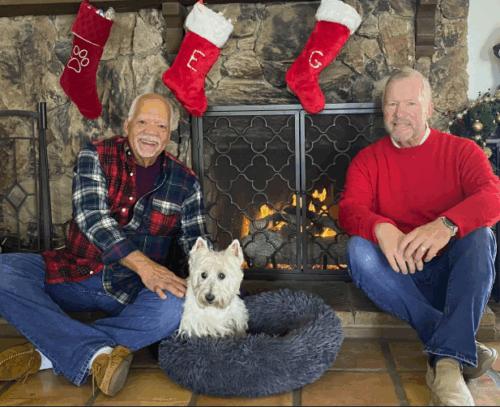
My closest friend, partner, husband—someone I care for deeply—has struggled with heart disease for many years. We’ve been together for more than five decades, enduring not only the normal pressures any couple might face but also the unique challenges of being a gay couple in a world that hasn’t always welcomed or protected us.
Managing these external forces—be they professional, societal, or medical—has tested us in ways we never anticipated. One of the most persistent challenges has been navigating a healthcare system that often seems built for straight couples. Medical providers frequently hesitate to include a same-sex partner in private conversations or decision-making, even when legal documentation is provided.
Unlike spouses in straight couples, who are typically assumed to be part of the decision-making process, I had to consistently prove my right to be involved in my husband’s care. My attorney advised me early on to carry his healthcare proxy and other legal documents with me at all times. I did so religiously. And I was asked—often—to present those documents before doctors or hospitals would speak freely with me about his condition. For older gay couples especially, having clear legal paperwork is not just helpful—it’s critical.
I learned to assert my place on his care team, to make myself seen and heard when it mattered most. That experience became a recurring reality through the years, as my husband faced several serious heart issues. One of the most significant episodes happened in 2011, when he required emergency heart valve replacement surgery. At the time we both held demanding jobs, and he wasn’t out at his workplace, though I was. This made everything more complicated. I couldn’t speak openly to his supervisors or ask for understanding, which isolated us even further during an already difficult time.
Back then we were living in New Jersey. The state had just passed civil union legislation for same-sex couples, though it was unclear how those unions would be treated by health insurers. It was left to each provider to decide whether they would extend coverage. We decided to get legally married so I could try to add him to my healthcare plan, hoping it would serve as legal protection against discrimination. Thankfully, the insurance company agreed to cover his surgery, and the procedure went well.
After retiring, we moved to Palm Springs—a place often described as a haven for LGBT couples. For the first time, we found ourselves surrounded by long-term gay couples who had been together for twenty, thirty, forty years or more. It was comforting. Our California attorney advised us to remarry there, as the state didn’t necessarily recognize civil unions with the same legal standing as marriages. Given California’s volatile history with gay marriage—legal, then not, then legal again—we followed that advice. For a while, life felt steady.
But political winds shift quickly, especially when it comes to LGBT rights. And then, another challenge came. My husband became gravely ill—this time not just with heart trouble but with a deadly infection that attacked his newly repaired heart valve. Every breath he took was a battle. I lay next to him at night, terrified, listening as each breath grew more labored and painful. I feared every inhale might be his last.
We found ourselves repeatedly in the emergency room, surrounded by other people in crisis—some alone, some clinging to loved ones. The hours spent waiting, watching, wondering, only magnified my fear. I didn’t know their stories, but I saw pain, urgency, and the same helplessness that gripped me. The room pulsed with emotion—fear, frustration, anxiety. It was overwhelming.
Outside the hospital, the world didn’t feel much different. The daily news was a relentless stream of war, oppression, political anger, and divisive rhetoric. Messages of control and exclusion seemed louder than those of compassion and unity. It all fed into my growing sense of despair. I was frightened—not just for my husband, but for humanity.
And yet, in those darkest moments, love found us.
Strangers, neighbors, friends, and family reached out in ways big and small. A woman in the ER waiting room, clearly burdened with her own worries, leaned over and offered kind words. Family members flew across the country to sit with us, help organize medications, fold laundry, and keep us company. Friends called daily to check in and offer support. These seemingly small gestures carried immense weight. They reminded us that we weren’t alone, that there was a network—sometimes invisible, sometimes unexpected—that had our backs.
What saved us wasn’t just medical care, though that was essential. What truly helped us survive the emotional toll of this ordeal was the unselfish kindness of others. The willingness of people—from all walks of life, of every identity—to show up and care made all the difference.
It wasn’t just our gay friends who came to our aid. Straight friends, bisexual friends, neighbors we barely knew, they all extended hands of help and hearts of compassion. These people formed a kind of village, bound not by identity or orientation, but by empathy. They turned our fear into hope, our anger into appreciation. In that support, we found healing—not just physically, but emotionally.
Our struggles, though deeply personal, revealed something universal: Life is made bearable, even beautiful, by the presence of others who care. Hardship doesn’t discriminate. But neither does love, if we let it flow freely.
I’ve come to believe that the pain we experience in life—while at times overwhelming—also opens us to profound connections. The very act of helping another person in distress, of offering a kind word, a meal, a hand to hold, is one of the most human things we can do. And receiving that help with gratitude is just as powerful.
These experiences have transformed my view of what it means to belong, to be part of a community. No law, policy, or political shift can erase the truth I’ve lived: We survive because others choose to care. That care crosses boundaries. It bridges divides.
By the grace of skilled surgeons and the enduring strength of the people who surrounded us, my husband recovered. He’s breathing easier now. He’s growing stronger each day. Another open-heart surgery gave him back his life—and gave us more time together. We do not take a single moment of it for granted.
We remain deeply grateful. Grateful to the doctors and nurses, of course—but equally to the friends, family, and even strangers who made time to help. Their compassion cut through our fear. Their generosity reminded us that in a world often driven by division, love still finds a way.
And so, I hope this experience becomes something more than just a memory for us. I hope it becomes a reminder—for everyone—that kindness matters. That presence matters. That showing up for someone in need doesn’t require a grand gesture. Sometimes, it’s as simple as a phone call, a kind word, or just being there.
If more of us practiced this kind of care—regardless of background, beliefs, or identities—our world could change. Not all at once, but bit by bit, heart by heart. Just imagine what could happen if compassion became our default, if community became the norm, not the exception.
This, I believe, is what life should be about: showing up for each other. Lifting each other up when the weight is too heavy to carry alone. Recognizing our shared vulnerability and responding with love.
In our hardest moments, it was love that made survival possible. And in the days ahead, it’s love that will light the way forward.
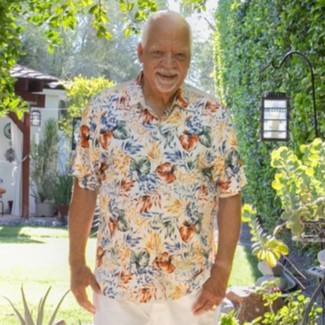
Geoffrey Newman is an award-winning author (2024 Nonfiction Book Award Silver Medallion, National Indie Excellence Award), teacher (American College Theater Festival Award of Excellence, John F. Kennedy Center for the Performing Arts), and scholar (Owen Duston Distinguished Professor, emeritus dean and professor). He has worked for 43 years in higher education as a professor, department chair and dean.