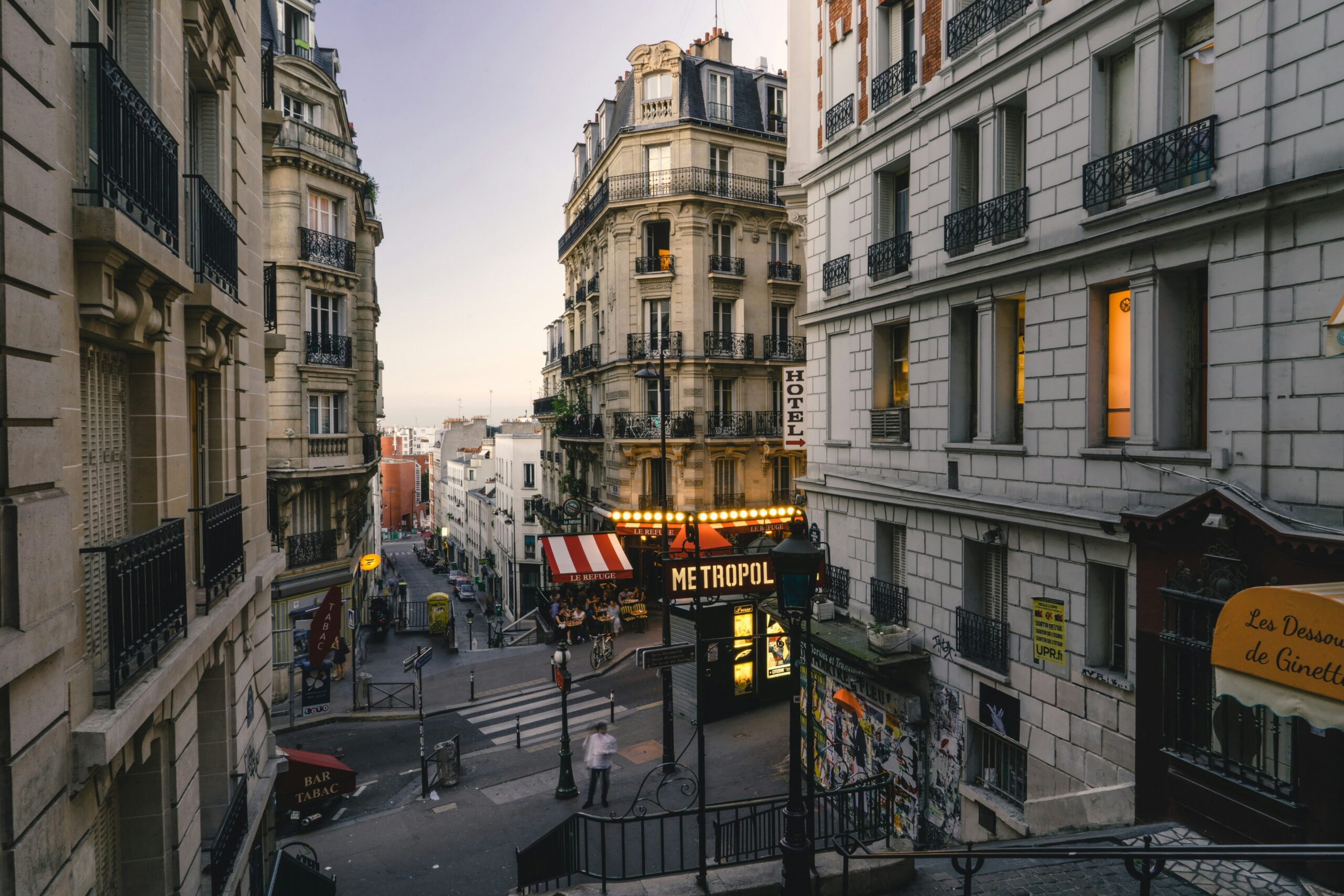
In the waiting room at my oncologist’s office I spied a picture book tucked under the years-old People magazines: Hemingway’s Paris. Paris had been an important city in many chapters of my life, and I was fascinated that this book should be there just as I was thinking about my experiences in France after learning of Felipe’s death.
Felipe (not his real name) had been my sometime-lover over a seven-year span during my assignments as a foreign service officer in Dubai, Damascus, Casablanca, and Washington. Born in Lima but raised in Cuzco, Peru, Felipe as a young man had been enrolled in a seminary to become a Catholic priest. (I too had studied at a Jesuit seminary before I realized the priesthood was not my vocation and embarked on my diplomatic career.) Because of his efforts to support activist causes against an often-repressive government, Felipe was forced to abandon his studies and flee Peru. He landed in Paris, where the only job he could find was as a bellhop in a hotel near the Gare Saint-Lazare.
I met him in 1986 at a Paris disco—Haute Tension—when I was on leave from my assignment in Dubai. We connected immediately. Over the next seven years we didn’t see each other often, but we got together whenever we could: He visited me in Dubai and I stayed with him multiple times in his tiny apartment in the 20th arrondissement on the Rue de la Dhuis. We weren’t in love, but we enjoyed each other’s company and shared many late nights together dancing in the dark discos of Paris.
In 1988 he came to spend a few weeks with me in Morocco. Tired of urban Casablanca, we spent a long week together in the Canary Islands and had so much fun on the beaches at Las Palmas. In 1989, when I was reassigned to State Department headquarters in Washington, Felipe talked of wanting to immigrate to the United States. At that time you could still be fired for being gay in the Foreign Service, so I was hesitant to encourage Felipe to remain in America. He imagined us living together and enjoying a long-term relationship as lovers.
We had a lot of fun touring the tourist sites in Washington, and he seemed to really enjoy being in America. But since I wasn’t in love with him, and I knew he wasn’t in love with me, I had a frank talk with him about the unlikely prospect of our continuing the same relationship. I thought we could be lifelong friends, but our connection as lovers had atrophied. That spark that had ignited in Paris had gone out for both of us.
Felipe said he was at a dead end in Paris, his aging muscles straining more now from lugging valises for tourists at the hotel. At a certain age, being a bellhop no longer seems quaint or charming. He still talked about his relationship with God and how he made time to pray daily, often using trips in the elevator to repeat common prayers. Sometimes a guest would see his lips moving and ask him about his praying. He took that as a sign that he ought to try to help others develop their own prayer practices.
When we decided to end our relationship, I escorted him to Dulles Airport so he could fly to Peru and visit his mother, then return to Paris. We parted on good terms. He didn’t seem bitter about our mutual decision to end things. I felt a little sad knowing something that had sustained us for years was finished, but I sensed that he was being prepared for something more significant. He was returning to Paris, convinced that he would give up the bellhop job and find something that nourished his spiritual side. I was rooting for him.
Felipe decided to resume his vocation to a religious life, and after some years of study he became a Dominican priest, working with the Latino community in the Paris diocese. We would correspond from time to time. Writing letters to him helped me maintain my French language abilities. He was empathetic that I had had to retire early from my diplomatic career because of HIV/AIDS. I had tested positive in the 1980s and had continued to work even as I watched so many fellow AIDS sufferers succumb to the disease. He even traveled back to the U.S. to see me in Cape May, New Jersey, in 1996, when I was gravely ill before new medications became available. Doctors thought my death was imminent then, and he wanted to see me before I passed.
In Cape May we walked along the shore and he described how much he was enjoying his seminary studies. He felt that all those years of bell-hopping had helped him stay close to the worries and challenges of working families. I could sense that he had evolved into someone with a greater focus on the soul, not so intent on our corporeal essence. By contrast, I was very much focused on how my body was failing. I was very ill, struggling with the side effects of the few medications available then to treat AIDS. I had even bought my headstone, since without a cure I suspected my days were numbered.
But new medications became available and, like Lazarus, I was able to resume a life without death always on the horizon. In 2016 I traveled to visit him in Paris. We had a pleasant reunion and he described how fulfilling his work as a priest proved to be. He exuded joy while talking about his work with young families, ministering to their children and organizing soup kitchens for the neediest. He also had an active ministry to inmates in the city’s jails and prisons. He seemed truly to have found his calling, and I relished his calm smile as he joyfully described doing so much good work.
Afterward I didn’t hear from him for a few years, but I thought of him often and wondered how he was doing. I felt sure his silence just meant that he was very busy, that he was probably consumed by the demands of being a good shepherd to the faithful in Paris. This year I did an internet search and discovered that he had succumbed to cancer in 2019. Funeral Masses were held for him in both Paris and Peru.
Having been so linked to him in life, I found it ironic that cancer had taken him as I sat in the oncologist’s office. Cancer, our shared companion. Felipe died at 65. I had my cancer surgery when I was 65. I guess it’s not so rare for people late in life to develop cancer, but now at 70 I know I’m fortunate to still be here. I like to think of Felipe in Heaven, perhaps still trying to learn a new dance step. Neither of us was a great dancer back in those smoky discos in Paris, and we used to laugh when those handsome French boys would chuckle at our clunky moves.
When I got called in to see the oncologist, I laid Hemingway’s Paris down. The doctor explained that there was a new growth in my lung that was worrying. He talked about more radiation. I stopped him. I told him that after all I had endured, with tongue cancer and surgery and radiation treatments, I was not interested in more radiation. He argued a bit. But I waved my hand in the air. It’s enough, I told him. With such a low quality of life (no eating, no tastebuds, no energy), I was ready to lower my sails. And I was already imagining how much fun it might be to reunite with Felipe among the angels.
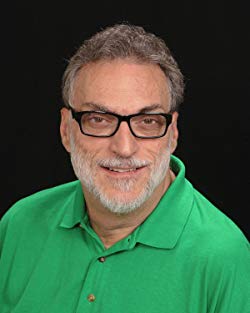
Michael Varga is a retired foreign service officer and author of the novel Under Chad’s Spell. He was diagnosed with AIDS in the 1980s and with cancer in 2020. Read more of his work at www.michaelvarga.com.