


 A DAY LIKE ANY OTHER
The Life of James Schuyler
by Nathan Kernan
Farrar, Straus and Giroux
475 pages, $35.
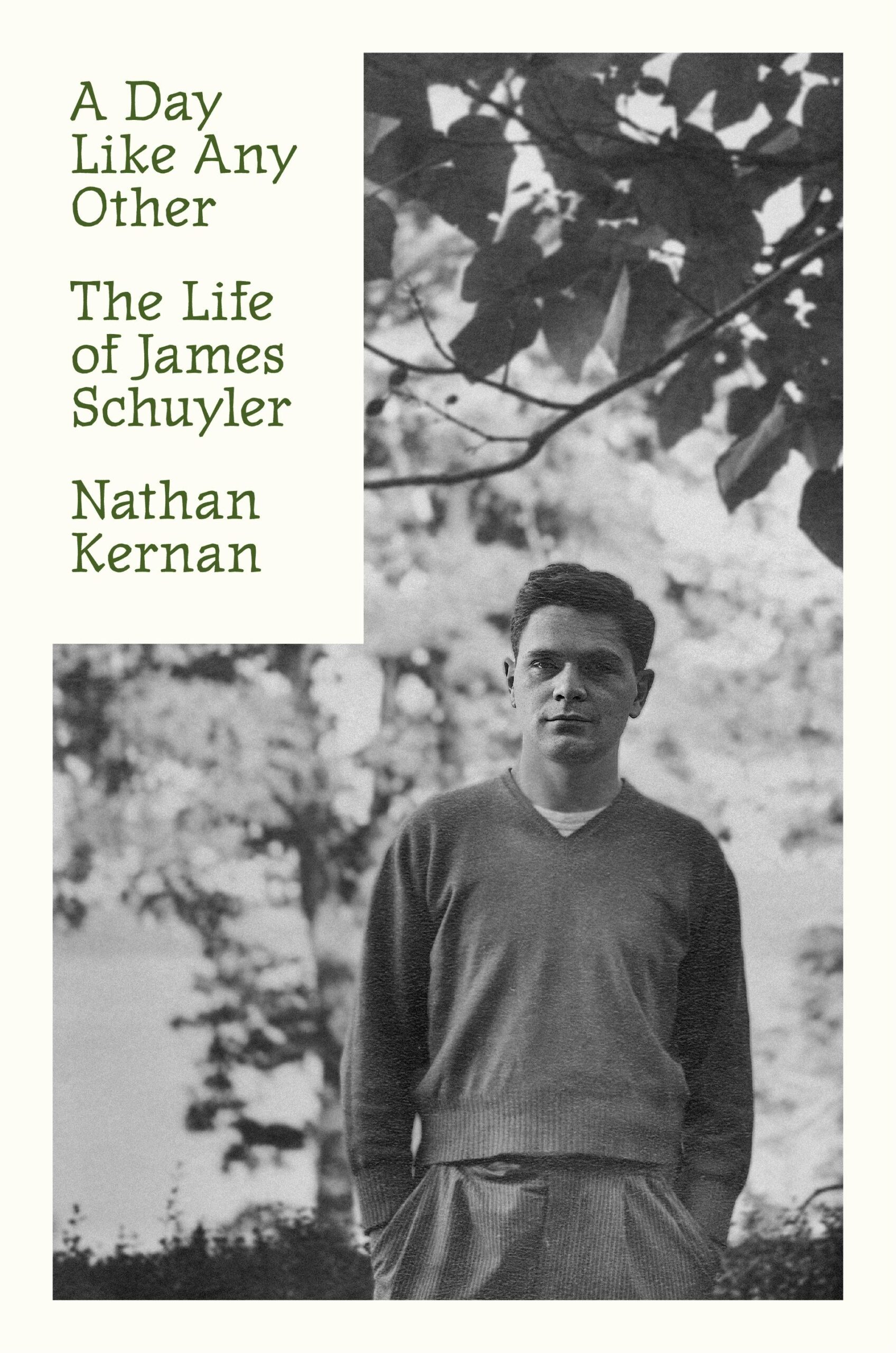
WHEN YOUNG Jimmy Schuyler told his mother that he was gay, she responded: “Just because you like Oscar Wilde, it doesn’t mean you have to do all those things.” He began doing “all those things” as soon as he could, starting at about age seventeen. While serving on a destroyer in World War II, he went AWOL and was then medically disqualified owing to his acknowledged homosexuality. With A Day Like Any Other, Nathan Kernan has produced a splendid biography of James Schuyler (1923–1991), a Pulitzer-prize-winning poet who occupied a prominent place in the New York School in the postwar era.
In the late 1940s, Schuyler left his bumpy youth behind and emerged into the gay social scene in New York and Europe, living for a time with partner Bill Aalto in Italy. When poets W. H. Auden and Chester Kallman visited in 1948, Schuyler was briefly Auden’s secretary, typing such famous poems as “In Praise of Limestone.” Other visitors included Truman Capote and his partner Jack Dunphy, who went shopping and returned with a record of Mickey Rooney singing “Treat Me Rough.” This could have been Schuyler’s theme song, as his relationships, beginning with the violent Aalto, often involved rough sex, and the rest of his life was not much smoother.
Schuyler’s middle years involved constantly shifting relationships and casual sex (James McCourt noted him as a “shuffling” shape in his forties at the Everard Baths) and expanding social connections, including such delights as seeing James Merrill wearing his maid’s dress and headgear at a Halloween party. These connections resulted in a double duo: Schuyler and his friend, poet Frank O’Hara, rolling around with the famous piano duettists Arthur Gold (briefly Schuyler’s partner) and Robert Fizdale. This new eight-handed entity was reflected in Schuyler’s poem “Grand Duo,” nominally inspired by a Schubert piano piece but an apt personal remembrance.
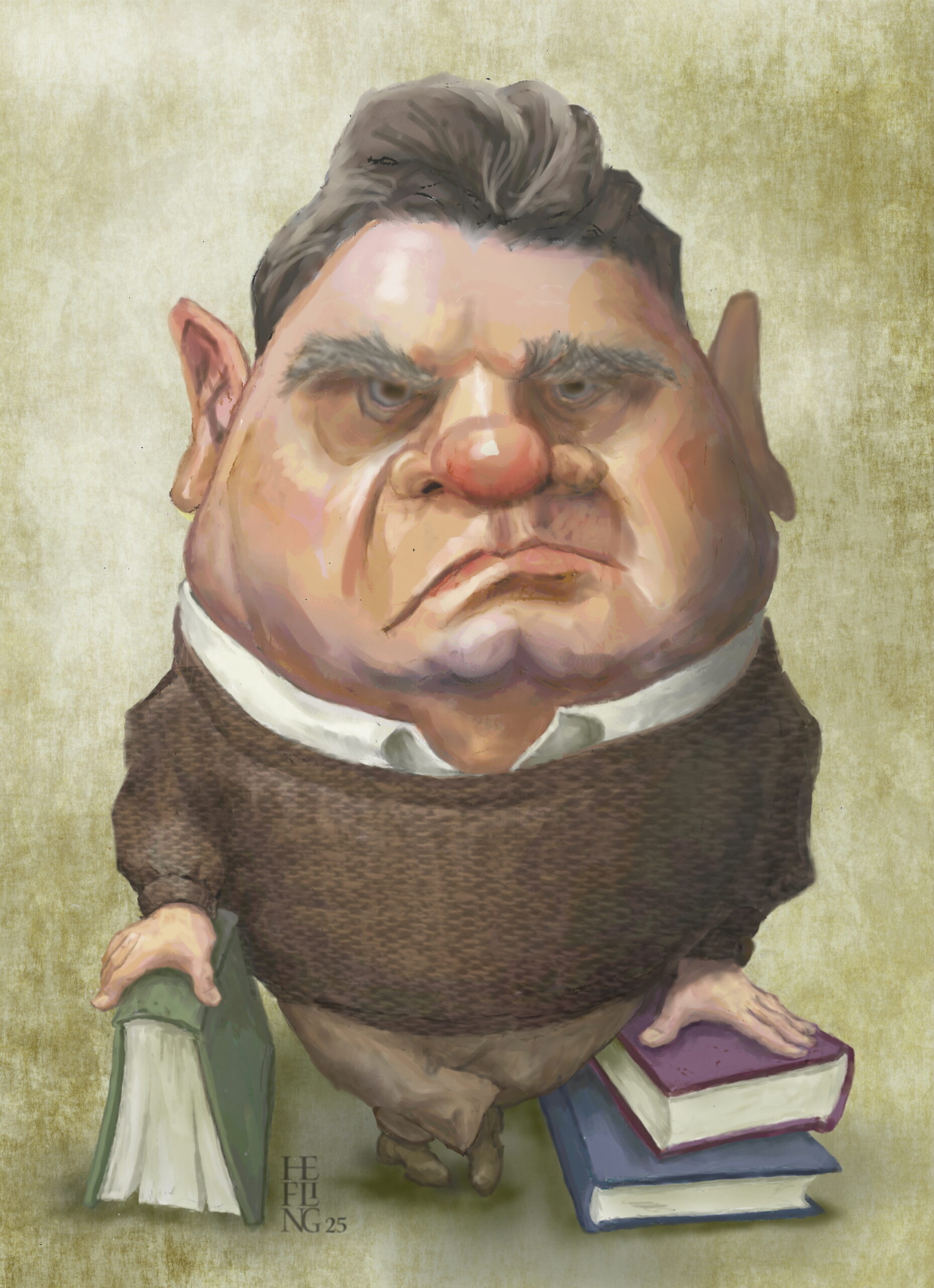 He had emotional and physical collapses on a regular basis. Schuyler’s capacity for friendship was substantial, but his lifelong theme was puppy-needs-care. He was subject to periods of depression, with various side effects including drinking, overeating, and near-catatonic withdrawal. At one point Merrill, who admired his poetry, arranged through a mutual friend for Schuyler to see Dr. Thomas Detre, who had treated Merrill some years earlier in Rome and was then practicing in Connecticut. Without help from his many patient and tolerant friends (in particular Fairfield Porter’s housing and Kenward Elmslie’s money), he would probably have been found dead at a young age.
Schuyler’s poetry, used as illustrative examples in the book, is observant and reactive to situations, scenes, and objects. His love poems for other men have a certain Isherwoodian distance to them, as though he is watching himself in a mirror. His work has a lighter touch and smoother flow than that of his close friend John Ashbery.
Poetry of a given period can remind us of social norms unique to the time. Kernan notes that Schuyler’s poetry showed a thematic “interest in radio as a communal flow of information” among the gay writers he knew, who often heard the same programs. Most of these poets and artists—the so-called “New York School”—did not have televisions in the late 1950s. (We tend to forget the milieu in which people worked in earlier times.)
One unique aspect of Schuyler’s work and that of other New York-based gay writers of the 1950s is how connected it was to the world of art, also undergoing some vigorous expansion at the time. Schuyler knew the young Willem de Kooning and sometimes read aloud to the married Fairfield Porter, who used Schuyler as an occasional painting subject and had a close and probably intimate relationship with him. The book includes an insert of well-chosen art and photos from Schuyler’s life, including art by Porter and images of Schuyler with Ashbery, Kallman, Samuel Barber, George Balanchine, and others.
Kernan’s career includes considerable experience in the visual arts, and this shows throughout the book, adding a refinement to our knowledge of Schuyler that a more academic biographer might not have shown. Schuyler was an artist, particularly in collage, as well as a poet, and participated in some joint projects with artists. He doesn’t seem to have communicated with gay poet Robert Duncan and his collagist partner Jess Collins, but the New York and San Francisco artistic scenes were not very well connected. Schuyler was all but glued to the New York group, not just through constant availability of friendly beds—he was quite the cutie as a sailor before drug-induced bloat in late life—but because he was rarely self-supporting and relied on friends to keep him housed and fed.
Kernan knew Schuyler late in the poet’s life and was the editor of his diaries, which no doubt helped make this biography so rich. This book has clearly been a labor of personal delight and passion. The quality of his research is beyond excellent—it is standard-setting. Facts are blended into a smooth, natural narrative that reads like a novel of mid-century gay life. Kernan offers a rich and rewarding biography of a poet and a man who earned the love of so many and died at age 67 after a long period of mental and physical decline.