
NINETEENTH-CENTURY English society adhered to conventional notions of Christian morality and respectable behavior, but the culture’s stiff upper lip quavered over anxieties around social, moral, and psychological degeneracy, which provide the context for the horrifying tales of Mary Shelley and Robert Louis Stevenson. These anxieties are personified by the authors’ monsters, whose bodies incorporate fear, desire, and fantasy.
Shelley’s Frankenstein; or, The Modern Prometheus (1818), written during the late Georgian period, emerges from a time of social and intellectual upheaval marked by revolutionary ideals and the dawn of modern science, in which emotional repression and anxieties about human nature were already prominent. Stevenson’s Strange Case of Dr. Jekyll and Mr. Hyde (1886) was written in the late Victorian era under the queen’s reign of straitlaced civility, by which time these anxieties had hardened into a cultural expectation of emotional restraint and moral rigidity. This historical layering enriches the interpretation of these works, highlighting how Shelley and Stevenson’s monsters symbolize the complex interplay of progress and repression across these transformative periods in English history.
Moreover, these anxieties coincide with a rise in purported cases of male hysteria, a diagnosis that emerged as medicine expanded its understanding of nervous and emotional disorders beyond women to include men. Historically, hysteria was pathologized primarily as a female condition, believed to stem from the womb (hystera in ancient Greek), but by the 19th-century doctors recognized similar symptoms in men—such as nervousness, emotional instability, fatigue, and psychosomatic ailments—particularly among men facing intense social pressures. This expansion reflected broader cultural fears about the destabilization of traditional masculinity in an industrializing, imperial Britain. Male hysteria thus became a subject where medical discourse and anxieties about gender intersected, marking off certain men perceived as physically or morally weak, and revealing underlying tensions about sexuality, identity, and social roles.
These anxieties about masculinity were not only medical but also social, influencing how men navigated and occupied male-dominated spaces in 19th-century England. Such environments became settings in which male identity, secrecy, and transgressive behavior came together. It is within these male social spheres—like scientific laboratories—that Shelley and Stevenson’s protagonists operate.
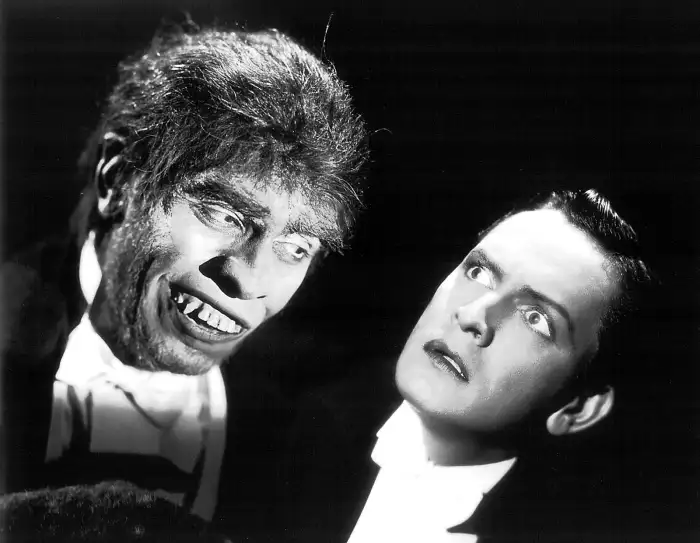
In Shelley’s Frankenstein, scientist Victor Frankenstein gives life to a sapient creation that seeks revenge through terror and murder when rejected by its creator. In Stevenson’s Strange Case of Dr. Jekyll and Mr. Hyde, the respectable doctor Henry Jekyll develops a serum to help hide his repressed urges, but the drug instead transforms him into the physical incarnation of his angst, Edward Hyde (even his alter ego’s name is a homophone referring to concealment). Importantly, Henry Jekyll was named after Walter Jekyll, a former clergyman and friend of Stevenson who was almost certainly homosexual and who had renounced his ecclesiastical career, spending several years living on the Continent—an experience that suggests he struggled with societal expectations and identity, possibly echoing the themes of duality and repression found in Stevenson’s novella.
Based on the strange behavior of Victor Frankenstein and Dr. Jekyll and their preoccupation with male spaces, readers may question what the protagonists are hiding and whether it might be their sexual orientation. Although it is not possible to “out” any of Shelley or Stevenson’s characters as gay, the stories can be examined to detect the elements of the homoerotic. Moreover, the stories share themes of male duality and the conspicuous absence of strong female characters, which serves to underscore the protagonists’ isolation and the prevalence of male-dominated spheres in both narratives. The marginalization of women reflects the cultural and social restrictions of the time, in which women were relegated to peripheral roles and denied access to scientific or intellectual pursuits.
This absence amplifies the emotional and psychological tensions experienced by Victor Frankenstein and Dr. Jekyll, who navigate their double lives and repressed desires largely in isolation from meaningful female influence or companionship. The limited presence of women also highlights the homosocial and homoerotic undercurrents in the stories, as male relationships and conflicts occupy center stage, and the protagonists’ struggles unfold within exclusively male spaces. Consequently, the lack of strong female characters not only mirrors 19th-century gender norms but also intensifies the portrayal of masculine anxieties about identity, companionship, and social expectations.
While the century’s scientific progress and rapid socioeconomic change fostered the growth of new urban male spaces—public and semi-public environments dominated by men and often inaccessible to women—these venues could embody both the promise and peril of modernity. From elite gentlemen’s clubs (e.g., The Reform Club, The Athenæum) and scientific societies to theaters, coffeehouses, commercial arcades, and even private laboratories, such spaces reflected industrial prosperity, imperial confidence, and male social power. Yet they also nurtured secrecy, alternative masculinities, and activities deemed morally suspect, from clandestine sexual encounters to unchecked scientific experimentation. In Frankenstein and Strange Case of Dr. Jekyll and Mr. Hyde, the protagonists emerge from and operate within this male urban sphere, their transgressive pursuits mirroring contemporary anxieties about shifting sexual and familial roles—anxieties that were frequently pathologized as “male hysteria.”
When Victor and Dr. Jekyll create their monsters, they experience a temporary reprieve from their hysteria. For Dr. Jekyll, the sensation is almost orgasmic:
The most racking pangs succeeded: a grinding in the bones, deadly nausea, and a horror of the spirit that cannot be exceeded at the hour of birth or death. Then these agonies began swiftly to subside, and I came to myself as if out of a great sickness. There was something strange in my sensations, something indescribably new and, from its very novelty, incredibly sweet. I felt younger, lighter, happier in body; within I was conscious of a heady recklessness, a current of disordered sensual images running like a millrace in my fancy, a solution of the bonds of obligation, an unknown but not an innocent freedom of the soul.
The same sense of relief from Victor’s hysteria is euphoric when he creates his monster and perceives his new soul mate as almost perfect and worthy of praising to God: “I saw the dull yellow eye of the creature open; it breathed hard, and a convulsive motion agitated its limbs. How can I describe my emotions at this catastrophe, or how delineate the wretch whom with such infinite pains and care I had endeavoured to form? His limbs were in proportion, and I had selected his features as beautiful. Beautiful!—Great God!”
Shelley and Stevenson’s works belonged to an era when social class determined upward mobility and financial prosperity. Englishmen were expected to be respectable husbands, providers, and protectors. But if they were seen as weak, they were judged inferior in a society in which male hysteria was increasingly diagnosed. Because Victor and Dr. Jekyll frequently exhibit the affliction’s unmanly symptoms—including melancholy, depression, and sickly appearances—their monsters can be seen as an expression of their masculine insecurities.
In this reading, Victor represses homosocial or homoerotic yearnings that cannot be fulfilled due to social proscription and his privileged status. He reacts by creating a soulmate or double being to compensate for this prohibition. In one instance, he explains his intense yearning for such companionship to his sister Margaret: “But I have one want which I have never yet been able to satisfy; and the absence of the object of which I now feel as a most severe evil. I have no friend, Margaret: when I am glowing with the enthusiasm of success, there will be none to participate in my joy; if I am assailed by disappointment, no one will endeavour to sustain me in dejection.” But the companionship desired is not that of a female: “I desire the company of a man who could sympathise with me; whose eyes would reply to mine. You may deem me romantic, my dear sister, but I bitterly feel the want of a friend. I have no one near me, gentle yet courageous, possessed of a cultivated as well as of a capacious mind, whose tastes are like my own, to approve or amend my plans.”
Victor is aware of his own hysteria, oppressed with a “slow fever” every night and “nervous to a most painful degree.” Such a need for a double being is also found when the hysterical Dr. Jekyll carries on horrific nighttime activities in the body of Mr. Hyde. Such hysteria can also be seen as an expression of homosocial or homosexual anxiety during a period when no terminology existed for such a sexual identity. (While the term “homosexual” had been coined in Germany in 1868, it was not in general usage until the early 20th century.)
Moreover, the men in Dr. Jekyll’s male space find Mr. Hyde abhorrent, viewed with “disgust, loathing and fear”—just as they might view a morally debased individual such as a homosexual. One recalls in the text: “there was something queer about that gentleman—something that gave a man a turn.” Dr. Jekyll also suffers from hysteria, telling his friends that he is “very low.” A friend confirms the illness, finding the doctor “looking deathly sick.”
Both protagonists can be considered “queer” not only because they exist outside normative heterosexual frameworks—evidenced by the near absence of marital or sexual relationships in the narratives—but also because “queer” here signals a broader challenge to the era’s norms of gender, sexuality, and identity. In the historical context of these works, “queer” encompasses identities and behaviors that deviate from dominant heteronormative expectations, including nonreproductive male relationships, emotional intimacy between men, and the repression or concealment of desires that could be socially stigmatized. Scrutinizing these texts thus opens up readings that detect homosocial or homoerotic subtexts and highlights how the protagonists’ double lives and creations metaphorically reflect the pressures and anxieties of living a “queer” existence in a rigidly moralistic society.
In the 19th century’s system of sex, gender, and body norms, the bachelor occupied an inherently unstable position—neither fulfilling the moral and reproductive duties of the husband nor fully outside the social gaze. Whereas a husband’s identity was grounded in the tangible legal and domestic framework of marriage, the bachelor was defined by a conceptual absence, by that which he was not. This absence provoked cultural unease, for bachelorhood evoked possibilities ranging from the romantic ideal of independence to the darker associations of idleness, sexual abnormality, or even moral degeneracy. Such ambiguity finds its fictional parallel in Victor Frankenstein and Dr. Jekyll—publicly respected men of science who, in their private lives, remain unmoored from the stabilizing presence of women and the domestic sphere. Their isolation renders them susceptible to forms of secrecy, obsession, and self-division that contemporary commentators might have read as symptoms of “male hysteria.” Dr. Jekyll himself hints at the social and personal strain of this position: “I am painfully situated … my position is a very strange—a very strange one. It is one of those affairs that cannot be mended by talking.”
Both Victor and Dr. Jekyll’s close-knit societies as well as their laboratories represent exclusively male spaces. Throughout both novels, men dine together, have tea together, and drink gin together. The structure of Frankenstein depends on men talking to each other: the monster to Victor and Victor to his male friends. And when Victor becomes engaged to his cousin Elizabeth, he has an emotional breakdown. Similarly, two of Jekyll’s friends maintain a peculiar male bonding ritual on weekly excursions:
It was a nut to crack for many, what these two could see in each other, or what subject they could find in common. It was reported by those who encountered them in their Sunday walks, that they said nothing, looked singularly dull and would hail with obvious relief the appearance of a friend. For all that, the two men put the greatest store by these excursions, counted them the chief jewel of each week, and not only set aside occasions of pleasure, but even resisted the calls of business, that they might enjoy them uninterrupted.
As Gothic literature, both stories relate to their eras as reactions to advances in science, as commentary on 19th-century consciousness, and as reflections of new masculine spaces. The tales of Shelley and Stevenson’s monstrous doubles not only haunt the foggy streets of 19th-century London; they also mirror the duplicity beneath the era’s stiff collars and polite society. Just as Victor Frankenstein’s creature and Dr. Jekyll’s alter ego lead double lives, many men of the time also navigated secret worlds hidden behind respectable façades. Moreover, Shelley and Stevenson’s monsters embody the secret subcultures, coded languages, and shadowy meeting places that flourished under the surface of English society. Their dual natures remind us that beneath the veneer of progress and propriety, 19th-century England was a stage for hidden identities and concealed desires, where science and secrecy danced hand in hand—sometimes with terrifying results.
Will Bashor teaches at the University of the People and lives in Sitges, Spain. His novels include The Bizarre Case of Dr. Grindle and The Bastard Prince of Versailles.