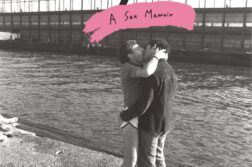

EDMUND WHITE, a dear friend, died suddenly in his New York apartment on June 3rd after suffering from a gastroenteritis infection. He was 85.
He’d written more than a dozen works of fiction, four plays, numerous essays, and biographies of Arthur Rimbaud and Marcel Proust. His “magnificent” biography of Jean Genet, as critics called it, earned him the Pulitzer Prize. He received many other honors as well, including the National Book Foundation’s Medal for Distinguished Contribution to American Letters, at least two Lambda Literary Awards, and the rank of Officer in the Order of Arts and Letters from the French government. A devoted philhellene, he visited my country several times and spent three or four summers in Crete.
I met him in New York in 2002 and we became friends immediately—unsurprisingly, since we shared many acquaintances. He was charming, soft-spoken, modest, kind, and often quietly ironic, with a sharp wit. A true cosmopolitan, he was a leading citizen of the gay community, which saw him as an icon. With his novel A Boy’s Own Story in 1982, he launched a trilogy that would become the iconic coming out story for a generation.
He lived on 22nd Street in Chelsea—an area I often visited because the gallery I worked with was nearby. His apartment was small, fairly tidy, and, like most writers’ homes, crammed with books. The walls were covered with small paintings and photographs. During my stays in New York, we would mostly meet at the local Greek restaurants, which had the best food. Over time, Edmund, who was never the athletic type, began gaining weight, and in 2012 he suffered two strokes. Not long after, in 2014, he had a heart attack.
Not having seen him since before the pandemic, I visited Ed on May 21st—a gray, chilly day with a light drizzle. His husband, Michael Carroll, opened the door. Edmund was sitting right by the entrance in the dining room, which he used as a study. The living room now looked less orderly, filled with even more books, photos, and all kinds of objects. Despite his health problems, he was in good spirits—cheerful and welcoming. He could no longer walk and relied on Michael’s help.

Before I could sit down, he said: “Go inside, straight down the hall. In the bedroom you’ll see your photograph—The Boy with the Fishes.” Out of modesty, I hesitated, but he insisted on showing me how much he appreciated me. So I went, thanking him. When I returned, he was on the phone. He explained to the caller that he had a visitor and promised to call back later. After he hung up, he said to me: “He’s a student of mine from the Philippines. He wanted to kill himself—he’s heartbroken, and now he’s all alone, without friends. I’ll talk to him later.” Before I left, the young man had called back three or four times.
Then Edmund showed me the latest book by the great Chinese writer Yiyun Li, who had stopped by earlier and given it to him as a gift. “Two of her sons have committed suicide,” he told me, sadly—perhaps unaware of the rather heavy atmosphere he was creating. To shift the mood, I asked how his latest book, The Loves of My Life, was doing. “You know,” he said, “some readers love my books, and others don’t. Do you remember the guy who tore into Hotel de Dream?” Of course I did—the book had moved me deeply, and I’d sent Edmund a warm and admiring email. He replied immediately, saying how much it meant to him—how comforting and encouraging my message had been, a balm for his soul. He’d just read a scathing review that had shaken him. “It was the most cruel and devastating review of my life,” he wrote.
“What else are you working on?” I asked. “I have a new book coming out in January,” he said. “Right now I’m working on a biography of the brother of King Louis XIV of France.” In a low, mischievous voice full of innuendo, he began to explain teasingly what I already knew: “You know, he dressed as a woman—with all the accessories. He was married twice, had children, had lovers and a mistress!” He especially emphasized “and a mistress!” laughing uproariously—and of course I joined him.
“Are you still a Lesbian?” was his favorite joke—a question he’d ask me every year, just to see if I was still going to the island of Lesbos for the summer. Then he began reminiscing about his summers in Chania, Crete, where he’d stayed in what had been a beautiful governor’s mansion (our mutual friend Charles Henri Ford had bought a house in the same town): “The mansion was lovely, and had a courtyard. A nice Englishwoman lived there, married to an American soldier. Charles Henri Ford visited us regularly because the wife used to type up his manuscripts. One day, while he was talking to the American soldier, the man said: ‘Well, I threw out all my old letters.’ And Charles said: ‘You must never throw them out—you could sell them to Harvard for millions of dollars!’” And Edmund burst out laughing at our friend’s ironic advice.
The poet James Merrill and the painter John Craxton also lived in Chania. They were all close. “Craxton used to ride back and forth from London on his motorcycle,” Edmund said, both impressed and slightly alarmed. And then, dropping his voice conspiratorially again: “You know, my friend James Merrill, he knew many of those Athens palace guards.”
As time went on, I asked if I could take his picture to capture a few more cherished memories. He gladly agreed. But when I picked up my camera for our final meeting, a kind of melancholy came over me. I didn’t feel capable of capturing anything truly evocative. Still, I took a few photos—ones that may some day have value, but only as documents.
A week later, when Michael told me of Edmund’s sudden death, I was overwhelmed by shock and grief. He was one of the last of a remarkable era—one that had everything: love, freedom, revolution, companionship, endless parties, romance, pleasure … and many deaths too, which made some people stronger. It was also an age of great writers, artists, and thinkers. I count myself among the lucky ones who lived through that time—and had the chance to know people such as Edmund.
__________________________________________________________________
Dimitris Yeros is an Athens-based artist and photographer whose works have been shown at dozens of solo exhibitions around the world.