
 The Journalist of Castro Street: The Life of Randy Shilts
by Andrew E. Stoner
Univ. of Illinois Press. 304 pages, $22.95
THE CAREER of Randy Shilts, the openly gay journalist who wrote three of the most widely read books dealing with gay life in the United States, seems to have been more or less synonymous with the history of San Francisco from his arrival in 1976 to his death in 1994—or such is the impression left by Andrew E. Stoner in his new biography. If you wanted to write a novel with a single character who would carry the reader through an epoch of incredibly rapid change in the gay movement, it would be Shilts. His first book, The Mayor of Castro Street (1982), was subtitled The Life and Times of Harvey Milk—the first openly gay man to serve on the San Francisco Board of Supervisors. His second, And The Band Played On (1987), was about the AIDS pandemic. And the third, Conduct Unbecoming (1993), had moved past AIDS to expose the long history of discrimination against gay people by the armed forces.
As a reporter, he dealt with all the issues faced by gay people at the time: coming out, workplace discrimination, violence, VD, and finally AIDS. By the time he got a job at The San Francisco Chronicle—after starting at The Advocate and then becoming a reporter for the local public TV station—he was so well known as a gay journalist that the owner of the Sutro Baths referred to him as the Chronicle’s “token fag.”
The fact that Shilts was a gay journalist covering gay stories raised a question that is in a way the subject of this book: Was Shilts an activist or a journalist, or some amalgam of the two? His gay critics, of which there were many, accused him of being a self-loathing gay man who wrote what the straight audience wanted to read—especially during the AIDS crisis, when Shilts argued that the baths in San Francisco should be closed. Shilts—who’d worked as a towel boy in the Majestic Baths in downtown Portland, Oregon, when he was attending a community college there, and later spent plenty of time at the tubs in San Francisco as a customer—considered them hotbeds for the spread of HIV.
But that gets us ahead of the story. Stoner begins his account in Aurora, Illinois, where Shilts grew up with four brothers, a philandering father, and a mother who drank—a family with whom Shilts remained close his whole life, even after coming out, when he began to think of his parents in more detached terms. His parents were divided on the subject of his homosexuality. His father told Randy he’d known since his son was six, whereas his mother would walk out of the room whenever the subject came up. Getting away from them seemed to be his priority when he moved after high school to Portland, where he came out in 1972 while enrolled in a junior community college, and then to Eugene, where he majored in journalism at the University of Oregon.
And then he moved, like so many young gay men at the time, to the gay Mecca: San Francisco. He arrived in 1976—the high point of an era whose “scribe,” as CBS News would later put it, he would become. He couldn’t get a job in mainstream journalism. At the university, he’d already experienced what he was convinced was anti-gay discrimination when the judges for an award given by the Hearst Foundation downgraded his bequest after, Shilts suspected, they learned he was an openly gay journalist—who’d led his colleagues on a trip to a gay bar in North Beach while in San Francisco for the awards. So he went to work for The Advocate. It wasn’t the mainstream, but it was a start, and Shilts was very ambitious. On rereading a journal he’d kept during those years, he had one comment: “It seems all I ever thought about was career and sex.”
 He was a contrarian from the start. “God, how I hate the Advocate,” he wrote his brother not long after starting there. Nor did he like some of his fellow writers at the paper. Tom Reeves, a Boston professor who had helped found nambla, and his fellow “radicals” were in Shilts’ eyes “just disgusting.” Even the way men cruised in San Francisco bothered him. In a letter to a cousin in 1976 he wrote: “I’ve developed a tremendous hate for gay bars … gay bars put one in a tremendously cheap position, having to stand around like a tramp waiting for someone to pick you up.” This double vision—the participant who is also a critic—meant that he was on a collision course from the start with those who felt any criticism of gay life was aiding the enemy.
The enemy was still outspoken in its contempt for homosexuals. None of his colleagues at The Chronicle defended him when he rose to introduce the idea of domestic partnership benefits at a meeting one day, and one of his colleagues shouted, “Sit down, you little faggot!” It’s good to be reminded of how difficult it was to come out in that other America—workplace discrimination, worry about one’s family, about how one would be treated in everyday life. Stoner’s book reminds us how far ahead of his time Shilts was on many issues involving the right to live as what used to be called derisively “a known homosexual.”
One of Shilts’ first assignments at The Chronicle was covering the death of a 33-year-old man named Robert Hillsborough, who had been murdered by a group of young Latinos whose ringleader, John Cordova, shouted “Faggot! Faggot!” as they stabbed him. After outing Cordova as a closeted homosexual, Shilts worried that Cordova might come after him when released from prison, because, as Shilts confided in his diary: “Some people, notably Latinos, are so freaked out about being gay that they would kill to prove they are not gay to the world—and to themselves.”
Being out was fundamental to Shilts. It’s hard to remember how rare this was in the ’70s, but when The Advocate sent Shilts to the 1976 Democratic Convention, the only gay candidate for a statewide office he could find, when asked if he planned to come out, simply replied, “Are you kidding?” By the time a California politician proposed making it illegal for a gay person to teach in the public school system, Shilts was so out that he debated the merits of the Briggs Initiative (Proposition 6) with its sponsor on TV—after which gay activists accused Shilts of becoming too friendly with Senator Briggs. Then there was the openly gay City Councilman Harvey Milk, who was wary of Shilts’ interest in writing about him at first, and there was Milk’s assassination by Dan White, and the riot that followed White’s acquittal. And then a strange new cancer started affecting gay men.
Even as a journalism major in college, Shilts had sensed that gay liberation was coming, and it would produce lots of stories. “My beat is the gay community,” Shilts told the Associated Press after he was hired by KQED.”I may not get as far in journalism as I would like, but I’m much more relaxed personally.” If he could only report the reality of gay life to the straight world, he believed, the absurd myths it held about gay people would be dispelled. At the same time, he was determined to portray gay life warts and all. While he had boyfriends and an active sex life, he was warning about VD transmission long before AIDS began, and lamented the fact that The Advocate depended on the sex ads in its “Pink Pages.” “I was writing for this publication that had all these dirty classified ads in it,” he said in an interview with Eric Marcus, “and I couldn’t send home to my parents a publication that had ads with ‘Gay man wants somebody to piss on.’ It was so embarrassing.”
As Michael Denneny, who became Shilts’ editor at St. Martin’s Press, said when he was looking for someone to cover the Harvey Milk story for Christopher Street magazine: “We were all self-hating. We needed to reformulate gay imaginations, re-imagine sex, and relationships.” Still, when David Goodstein, the owner of The Advocate, insisted his employees attend a form of EST that Goodstein thought would help them feel better about being gay, Shilts quit. This left him still on the fringes, until he got a gig with the public television station.
It’s said that minorities are allowed one spokesperson and one only at any given time—whether because reporters are too lazy to cultivate more than one source or because the mainstream audience doesn’t care. By the time Shilts’ book about the AIDS pandemic, And The Band Played On, came out, he was that figure, on television and in print. As such, he was the target of gay activists who considered him an Uncle Tom. Michelangelo Signorile, a gay journalist on the East Coast known for outing public figures, accused Shilts of compromising himself by being the person whom the “Holy Trinity”—Signorile’s term for the Hollywood, Washington, and New York media— always turned to on gay matters. While Signorile respected Shilts’ success, he claimed Shilts “reeked of self-loathing.”
From the moment Shilts argued for closing of the bathhouses in San Francisco, he had faced this charge. His answer was always the same: he was just a reporter. “Whenever a hot issue comes along,” he said in an interview with the porn magazine Stallion, “I’m going to become an unpopular guy, because I’m always going to be a journalist first and a gay person second. … Look, you can do two things in journalism: You can tell people the truth or you can tell them what they want to hear. Given a choice, most people would far prefer to hear what they want to hear. They really don’t want any bad news.” (Larry Kramer got the same reaction when he started his campaign against AIDS.) “The reason I get screamed at so much by such movement people is that I will not be a gay activist. I’m a professional who chooses to be open about being gay.”
The ongoing altercation with his own community reached its climax when And The Band Played On came out, a book that raised an issue that has continued to affect his reputation posthumously. That is the use Shilts made of Gaëtan Dugas, a gay airline steward made famous by Shilts as “Patient Zero.” Shilts had a source named Selma Dritz, a doctor at the San Francisco Health Department, who kept Shilts abreast of the latest developments in AIDS research. Dritz told Shilts about a study of the way HIV was being transmitted within small groups of gay men, one of which seemed to center on Dugas. Because Dugas was the only member of a particular infected cohort not from California, the researchers named him Patient O, which stood for “Outside California.” Once the mainstream press got wind of this story, however, they made Patient O stand for “Zero”: the progenitor of AIDS, the Zero that came before Patient One, Patient Two, and so on. It was a complete misreading of the study, but once it caught fire, there was no stopping it. Dugas was turned into the Typhoid Mary of the AIDS epidemic, the man who had brought it to the U.S., the paragon of the selfish, amoral, sex-obsessed homosexual.
As Stoner tells it in an entire chapter devoted to the subject, the genesis of Gaëtan Dugas’ demonization was an all-too-human story of a writer’s ambition, an editor’s advice, and the realities of getting attention in our over-saturated media age. The first problem Shilts faced was getting someone to publish a book about AIDS, because, in the view of publishers, AIDS wasn’t over; the story had no ending yet. Shilts wanted the book published precisely because that was the case, yet the media were losing interest in the subject, and the Reagan White House was ignoring the problem. After Michael Denneny, Shilts’ editor on the Harvey Milk biography, sold the book to his boss at St. Martins Press, the problem of the media’s indifference remained. Denneny, who in Stoner’s account attempts to take the blame for what happened, went to a former press agent he knew, who told him that he wasn’t going to like this advice, but the only way they’d get media attention was to individualize the story in the person of Gaëtan Dugas. A Faustian bargain if ever there was one: Shilts knew that people were dying, that the media were going to ignore his book, and that, according to Denneny, this was the only way to avoid oblivion. So the two of them went ahead with Patient Zero, and, as predicted by the press agent, the media took the bait and made the book a best-seller. The New York Post led the pack on October 6, 1987, with the headline “The Man Who Brought AIDS to America”—precisely what Dugas (who actually cooperated with health officials in their research) could not be said to have done. The tabloid magazine The Star went with “The Monster Who Gave Us AIDS,” and even Time used “The Appalling Saga of Patient Zero.”
The Journalist of Castro Street is the result of copious research and interviewing, though Stoner does not use the narrative style that makes some biographies read like novels. It’s a book by a professor of communication studies about a journalist. It looks at the ethical choice Shilts faced between objectivity and advocacy. “I never wanted to march,” Shilts told Rolling Stone in an interview. “You give up some prerogatives about being an activist when you become a journalist, because it is like public officials—you don’t want to create the appearance of impropriety.” But he never gave up advocacy: During the AIDS crisis, he made sure his medical horror stories in the Chronicle came out on Friday, so they would make readers think twice about going to the baths on the weekend.
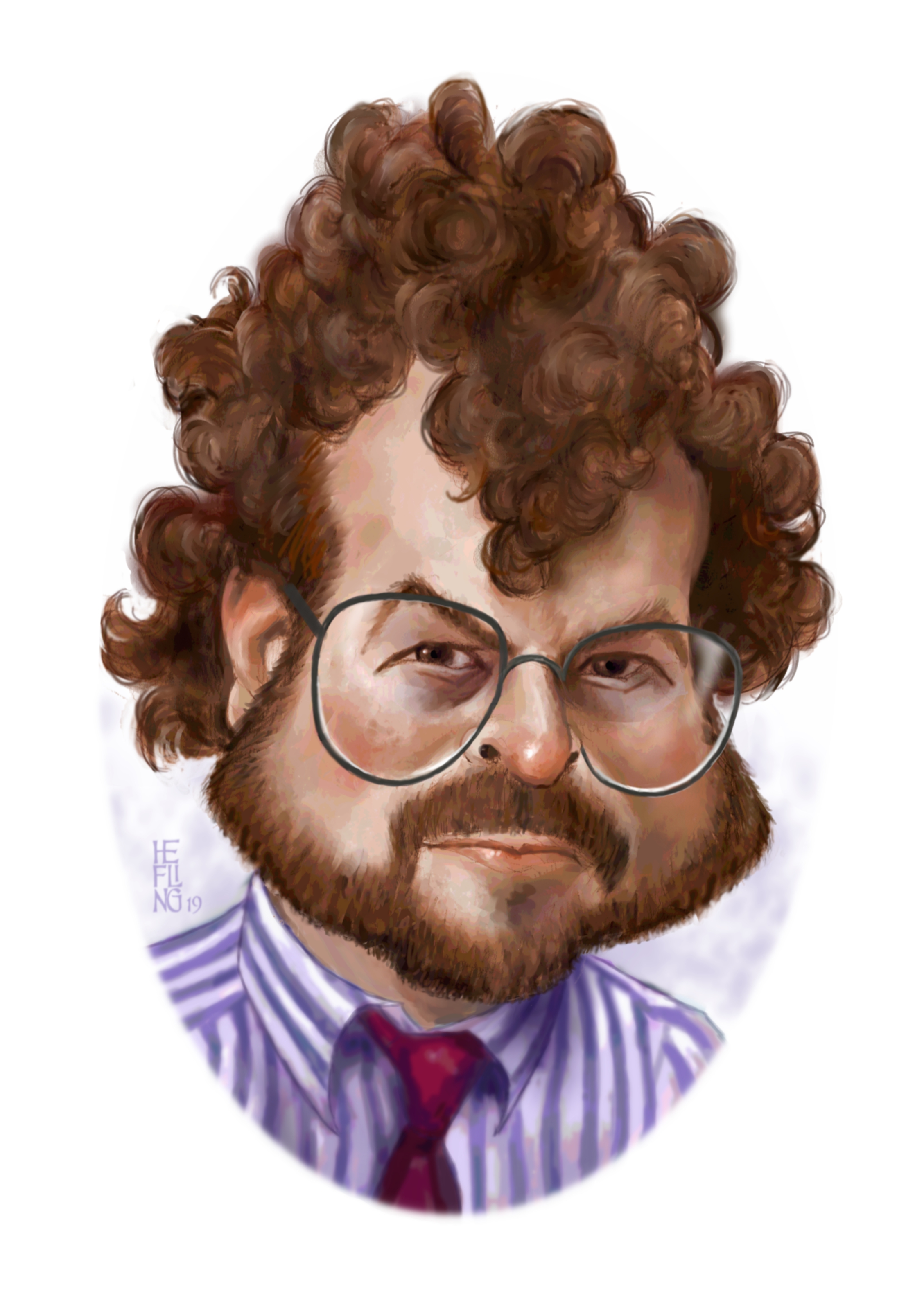
Shilts had his own problems, of course: his big ego (“Randy liked anything about Randy,” according to a Chronicle newsroom manager); his daily reliance on pot and alcohol until he got sober in 1985. What never failed him, however, was his devotion to his profession. Denneny felt Shilts was “in love” with being a reporter: “I think of him as a classic journalist, someone who took the almost romantic notion of being a journalist, totally believed it, and lived it out.” One need only look at pictures of Shilts at the Chronicle, or watch him on YouTube speaking to Harry Reasoner during CBS’s story on Gaëtan Dugas. In his long-sleeved striped shirt and suspenders, he’s right out of All The President’s Men.
In retrospect, Shilts seems to have been an extremely ambitious man with a staggering work ethic who found his vocation and personal life coterminous and lived both to the limit. He had an eye for the story as few reporters do. His next book, already underway when he died, was to have been about sex abuse in the church. At one point Stoner wonders what Shilts would have been like in our present era of cable news. But when Stoner lists the issues Shilts might be discussing—“gay marriage, child adoption … non-discrimination in housing, employment and public accommodations”—one is struck with how domesticated these items seem compared to what Shilts had both to report on and to experience personally.
There is something especially tragic about Shilts’ death at 42. Unable to finish Conduct Unbecoming, unable to breathe without oxygen tubes, going in and out of consciousness, trapped in his house in Guerneville, California, by the disease whose history he’d written, he was “left with the strange feeling,” he told 60 Minutes, “that your life is somehow finished without being completed.”
One of the things left unsettled might be related to the quarrel he carried on with gay activists who felt that closing the baths was an abrogation of their civil rights. Shilts’ dislike of nambla, the Advocate’s Pink Pages, the feeling of cheapness he had hanging out in gay bars, may simply be a reflection of his having grown up in a Midwestern, conservative, working-class family—or the fact that gay liberation was inescapably about different forms of sex. That’s how the mainstream culture viewed it, certainly. Go on YouTube and watch Harry Reasoner’s interview with Shilts when his book about Patient Zero was big news. In the clip, CBS shows shot after shot of gay men walking down Castro Street with their arms on each other’s shoulders or butts. At one point one man pats his partner on the ass, as if to say, “This is mine”—at which point I could only imagine what straight viewers must have been thinking.
Shilts, too, I suspect, felt a certain discomfort that our quest for civil liberties could so often be reduced to the right to have as much sex as we wanted, any way we wanted it. You can hear his longing to escape from the merely sexual in something he said to Stallion: “If anything, AIDS is forcing gays to do something which we have resisted for a long time; to start dealing with each other on an ethical basis beyond sex. Before, everyone was spending his nights picking up one-night stands in the bars. Every man you met was weighed by his sexual status. … Lord knows, I did it too. But it was a very immature and adolescent stage to go through.”
Andrew Holleran’s fiction includesDancer from the Dance, Grief, andThe Beauty of Men.