THROUGHOUT THE 2010s, the microblogging platform Tumblr was the website of choice for many in an increasingly online generation. For queer youth in particular, the site offered unprecedented access to community and experimentation with respect to both identity and sexuality. Due to Tumblr’s relaxed stance on censorship, the site was flooded with erotica, pornography, and niche fetish content, giving young people an expansive array of identities and sexual roles to try out. Most notoriously, Tumblr hosted a range of erotic fandom content including furry porn and “Not Safe for Work” (NSFW) fan art, categories that helped shape Tumblr’s public image, radically influencing the site’s reputation both on- and offline. The prevalence of fetish content, in conjunction with its irreverent user base, contributed to Tumblr being referred to as a “hell site,” a name that reflected its joyfully depraved reputation.
This all changed in 2018 when Tumblr—allegedly in response to underage pornography being found on the platform—enacted a blanket ban on adult content. The move targeted, among other content, “female-presenting nipples,” a category that proved to be deeply controversial. Though it may sound funny in retrospect, the ban was a death blow to the kink-forward culture Tumblr had cultivated since its launch in 2007, one that was felt especially deeply by the millions of queer young adults who had come out and of age on the platform. The ban followed the passing of fosta-sesta, a law that holds websites “accountable” for the content they host. Tumblr users suspected that the ban also was influenced by Verizon, which had acquired Tumblr’s parent company Yahoo the previous year and increased the volume of advertising on the site. For most of its existence, Tumblr had remained almost ad-free, a state that was both massively popular and deeply unprofitable. Unfortunately, in this effort to “terraform” the website into something more advertiser-friendly, Verizon clearly underestimated how central smut was to Tumblr’s core identity, a miscalculation that alienated the site’s core audience.
While Tumblr was many things to many people, smut was undoubtedly a central pillar of Tumblr’s remarkably queer institution. For this reason, Tumblr was, for all its many faults, an invaluable space of discovery for a generation of queer youth growing up online. Since many of us lacked access to traditional queer spaces, Tumblr was the darkness in which we fumbled, a space to discover ourselves and each other away from prying eyes. NSFW content on Tumblr could be disgusting, but it was also an essential medium of queer experimentation, and without it an entire queer underworld threatened to disappear entirely.
By the time I was introduced to Tumblr in 2014, the website had already gained its reputation for being a queer haven and/or cesspool, depending on whom you asked. From its inception, Tumblr had defined itself by progressive politics, pro-consumer practices, and a brazenly permissive policy on explicit content. At one point, the official stance on “adult-oriented content” was actually stated as “Go nuts, show nuts. Whatever”—an attitude that quickly attracted a community of queer youth, alternative porn enthusiasts, and creators who felt more at home on an “underground” platform. While Tumblr was in fact far from underground, it wasn’t owned by data giants like Google or Facebook, which offered some protection from mainstream monetization and surveillance practices.
Additionally, early Tumblr’s (unintentionally) opaque navigational tools and emphasis on anonymity facilitated a winding network of niche communities in which queer identity and sexuality flourished. These communities were heavily kink-forward and could cater to a variety of highly specific sexual needs. As researcher Noah Tsika put it: “[F]etish-specific Tumblr blogs serve[d]as their own kind of walled garden … insulated from the potential torrents of moralising passerby so familiar from Twitter, and sustained by a self-selecting group of like-minded individuals.” While these walled gardens provided some seclusion, their content circulated freely across Tumblr, seeding a broadly kink-inclusive culture marked by irreverence, wit, and perversion. The result was a social media platform that was one part Wild West and one part queer carnival, a space in which seemingly anything was possible.
§
For the droves of young queer people on the platform, fandom was where these promises of queer freedom were most accessible. The term “fandom” generally describes the communities that arise around shared interests, and on Tumblr these were typically movies, TV shows, comic books, music, and literature. Fandoms—with their abundance of pre-existing characters and fictional worlds—provided ideal vehicles for exploring gender and sexuality in a relatively low-risk way. Fandoms also provided shared languages and frameworks for discussing and queering popular media. Of these, by far the most popular framework was “shipping,” a term that derives from the word “relationship” and describes the pairing of characters in intimate relationships that aren’t part of the fictional world’s existing canon.
The term “shipping” wasn’t used until the 1990s, but the concept originated within the Star Trek fandom during the 1970s with writings known as “slash fiction.” This term was coined to categorize fanfiction featuring relationships between Kirk and Spock—a pairing primarily known as K/S. Somewhat counterintuitively, the K/S fandom was overwhelmingly popular with women, many of whom identified as lesbians. Slash fiction was initially segregated from the respectable side of fandom, but its popularity exploded after the introduction of the internet, and slash was absorbed into the umbrella category of shipping. Slash still refers solely to male-male pairings and was incredibly popular within Tumblr’s queer communities throughout the 2010s. In a survey conducted in 2017, slash pairings made up 63 percent of the decade’s most popular “ships.”
Slash not only provided a model for queer experimentation within fandom but also defied common assumptions of how queer desire should function. The popularity of slash among women was a point of consistent controversy and curiosity. There are dozens of theories, including one from prominent sci-fi author Joanna Russ, who argued in 1985 that slash could be seen as a metaphor for sexual equality, with the submissive partner being read in the female role. I would argue that for Tumblr users in the 2010s shipping allowed for a wider range of queer expression, giving younger users the opportunity to role-play beyond the confines of gender or sexuality. Rather than using slash as a representation of balanced heterosexuality, the genre became a space for exploring the erotic potentials of queer sexuality when, as a slash fan calling herself Shoshanna wrote in 2011: “[E]veryday life wasn’t differentiated from sex life.” Through this diversified lens, slash became a highly productive space for a range of queer becomings.
For example, in 2015 the fandom for British boy band One Direction was overrun with young queer women and lesbians, many of whom devotedly shipped leading members Harry Styles and Louis Tomlinson in a pairing known as “Larry Stylinson.” At the time, “Larry” was the most popular ship on Tumblr and the subject of hundreds of thousands of posts, fan-edits, fanfictions, and artwork. While this may sound like an odd addition to lesbian youth culture, scholars such as Jessica Pruett theorize that One Direction’s youthful, androgynous masculinity had “enormous lesbian aesthetic and erotic appeal.” Within the fandom, lesbian-identified fans would share pictures of lesbians accompanied by One Direction lyrics, and other fans regularly used the framework of “femslash” to reconfigure Louis and Harry as two girls in love.
Femslash is the female counterpart to slash, but femslash within the One Direction fandom engaged widely in gender swapping—another popular trope—to explore new avenues of the pairing’s queer masculinity. As such, Larry femslash crossed not only sexual boundaries but also gendered ones, to create content that hinted at transgender horizons beyond the immediate lesbian imagery. The example of One Direction and Larry highlights the collectivist and transgressive nature of queer fandom on Tumblr. Not only do frameworks like shipping and gender-swapping provide a means of engagement for queer youth, they also create the necessary infrastructure for community building and collective experimentation, as well as a framework for asserting queer existence within a media ecosystem dominated by straight, cisgender perspectives.
However, despite the somewhat utopian vision of lesbian One Direction fandom, Tumblr’s queer cityscape was primarily constructed out of seedy back alleys, courtesy of the inextricable relationship between fandom and kink that had formed on the platform. While shipping provided the structure for queer relationships, kink gave them something to do. Given the prevalence of young teens on the platform, fandom kink was shaped in equal measure by inexperience and unbounded perversion, forces which produced an overwhelming volume of work.
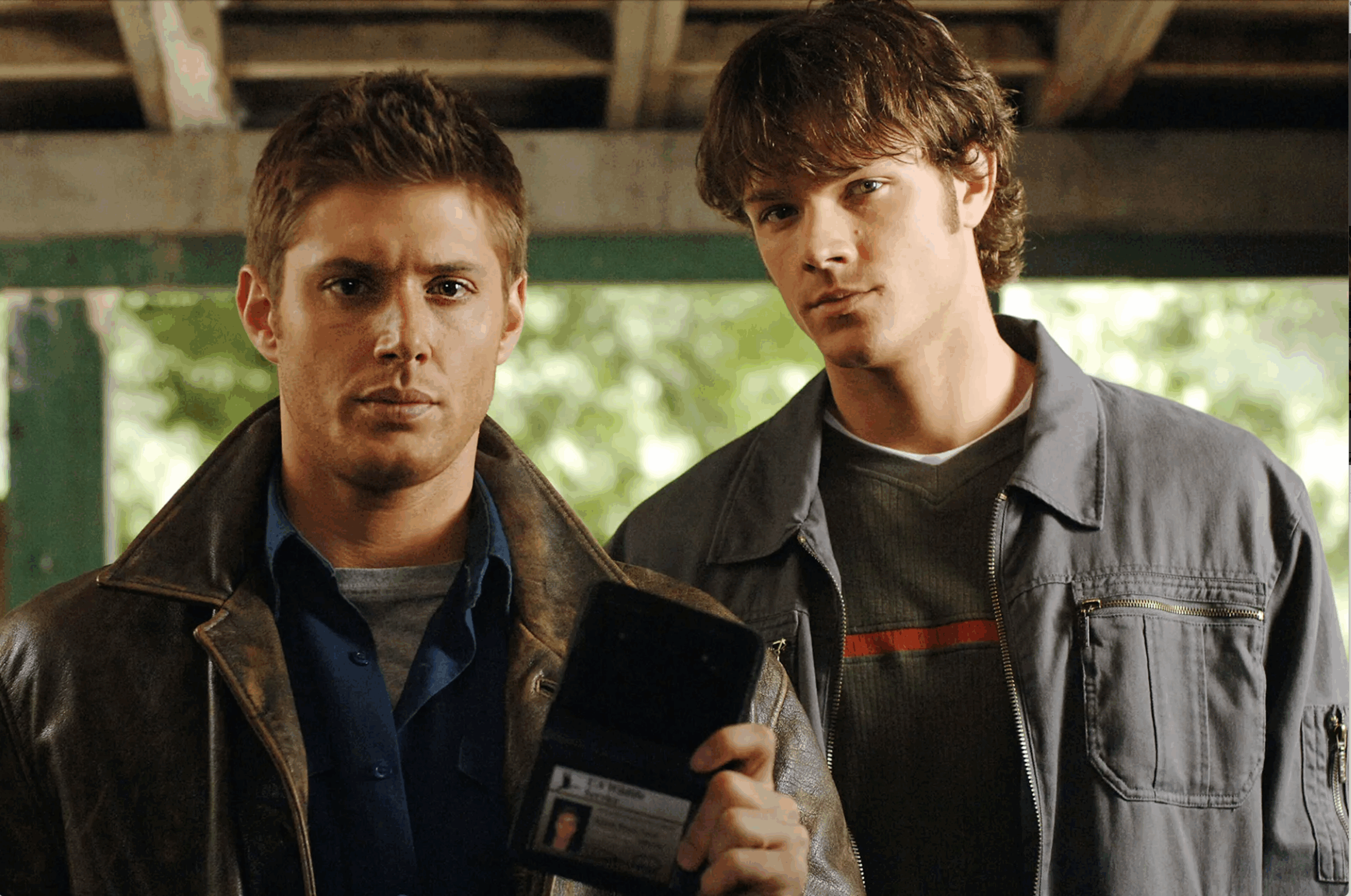
The fandom surrounding the TV show Supernatural is often held to be the north star for Tumblr perverts, a sentiment reflected in its fan works. Of the 261,025 works listed under the Supernatural tab in fanfiction’s Archive of Our Own (AO3), nearly 57,000 are marked as Explicit—the site’s most extreme content rating. While the wealth of low-effort smut on AO3 would indicate that most of the explicit works were inconsequential, fourteen of the twenty overall most popular works are sexually explicit. The works also contain evidence of substantial effort and passion. One standout is a 500-page epic devoted to Harry Potter topping his way through the casts of Supernatural, Hawaii Five-O, Fast and Furious, Grey’s Anatomy, and Sons of Anarchy. Others feature a wide swath of kinks including male pregnancy, dubious consent, incest, and “cum inflation.” While these categories may seem niche, each of the most popular works have been viewed more than 300,000 times, a count that suggests either a respectable reach or a handful of fans in dire need of intervention.
§
In my own time on Tumblr, I got deeply engrossed in anything to do with the aforementioned gender-swap (sometimes called gender-bending) content. While swapping genders isn’t inherently sexual, its erotic potential showed up in a variety of trans-oriented kinks. The most common, particularly within the Supernatural fandom, was male pregnancy, which I consider a subcategory of gender swap. While some critics argued that the heteronormative mandate of procreation rendered slash pregnancies less queer, my fleeting interactions with this genre of fan work left me with a radically delimited notion of the relationship between gender and embodiment. Now, I can even read a handful of these works as tacit (through likely unintentional) rejections of biological essentialism. Male pregnancy works were never my favorite, but they challenged my only other reference points for transness at the time: the character Ted’s recurring nightmares in the TV series How I Met Your Mother, in which the girl of his dreams turns out to have a penis. While trans smut was—and continues to be—rife with regressive representations, I found these depictions of an ostensibly transgender sexuality far more compelling than being someone’s worst nightmare.
Additionally, the larger body of work to which trans smut belonged went a long way in presenting embodiment as a mutable characteristic. Within this broader context, kink was proof that diverse, nonconforming bodies could be subjects of desire rather than taboo objects. Morgan Fisher, a fan-artist who gained a following for drawing popular characters as fat and trans, describes the feeling more articulately: “[W]hen the sum total of media representation for people like you consists of cruel jokes, fear mongering, and niche fetish porn, it’s easy for your desire to become about three things: desire to destroy yourself, desire to be someone else, and desire to please others no matter the cost to yourself.” For me, the idea of a self-defined, body-positive erotic was life-altering, opening not only my perception of gender but my sense of sexual attraction. I had long suspected myself of being bisexual, but my hang-ups around my gendered body made a stable notion of sexuality elusive. Kink, via fandom, normalized sexual and gendered ambiguity through excess, paving a wide path for those who followed.
No product of queer fandom paved a wider—or more controversial—path than the Omegaverse. Originating within the Supernatural fandom, Omegaverse content imagines worlds inhabited by Alphas, Betas, and Omegas, categories that come with their own sexualities and even biological structures. Typically presented as an exaggeration of dominant-submissive dynamics, the Omegaverse is one in which anyone can become pregnant, regardless of primary gender. Those who impregnate are Alphas, their desires driven by animalistic breeding cycles. Omegas, functionally mega-bottoms, are generally meeker and give off pheromones that incite the Alpha’s attention.
For a generation that grew up in a world with little access to queer spaces, there is little distinction between the online and off-line worlds, especially when it comes to queer identity. Older members of the community may see the idea of digital queerness as depressingly immaterial—a reality inextricable from the reported demise of queer physical spaces. Wrote critic Colin Keays in his 2020 article, “After the Gay Bar: The Uncertain Future of Queer Space”: “If encounters between lgbtq+ people are now more likely to happen from a network of [digitally]interconnected bedrooms than in communal spaces, queer people ironically retreat back, behind the screen and into the closet, reversing decades of activists fighting for visibility. Moreover, queer space is completely depoliticized when a once vibrant culture is mediated by a private technology company and flattened to the surface of a smartphone.”
But while spaces like Tumblr were far from perfect, the digital spaces I encountered in the 2010s also were far from analogous to the closet. Growing up online, anonymized and primarily queer spaces like Tumblr allowed me to explore queerness far beyond what would have been possible offline. Shielded from the judgments and prescribed roles imposed through in-person structures, I could more easily access sides of myself that would have been subsumed by more unforgiving conceptions of gender, sexuality, and embodiment. This was especially true given that for much of high school I was solely male-presenting and dating a woman, qualities that summarily invalidated me in the eyes of my few queer peers. Online I was not beholden to my appearance or my relationships, free to imagine myself flitting between categories like male-female, butch-femme, and top-bottom without allowing these terms to solidify and define any aspect of my being.
In her manifesto Glitch Feminism, Legacy Russell shares similar reflections on art critic Gene McHugh’s sentiment that “for many people who came of age as individuals and sexual beings online, the internet is not an esoteric corner of culture where people come to escape reality and play make-believe. It is reality.” To this, Russell adds that “IRL [in real life]falters in its skewed assumptions that constructions of online identities are latent, closeted, and fantasy oriented (e.g., not real) rather than explicit, bristling with potential, and very capable of ‘living on’ away from the space of cyberspace.” Thus spaces like Tumblr function as a sort of queer laboratory, a space in which identities can be tried on, altered, and scrapped as if they were outfits being prepared for a night of clubbing.
I gravitate toward Russell’s description of digital space because it evokes the power of queer nightlife and community that has been rendered all but non-existent for young people by forces like gentrification and the Covid pandemic. Her words evoke the sense of power gained through anonymity and the charge generated from being plugged into the overwhelming solidarity of queer community. There is something undeniably powerful about reading 200 pages of gay werewolf erotica and knowing that nearly half a million other freaks have been down the same path, to see defiance and erotics celebrated rather than culled. While these worlds have suffered over the past few years, and continue to do so under the constant threat of censorship, I have faith that depraved queer joy will continue to exist across all corners of the internet and circulate intractably into the world beyond.
Casper Byrne is a freelance writer and peer support specialist based in Cambridge, England.