

ROBERT MAPPLETHORPE brought disciplined attention and innate æsthetic precision to the photographic process, exploring the kink of leather men engaged in the paraphilias of S/M in a way that led to greater acceptance of sexual experimentation and of photography as a sometimes risqué art form. The avant-garde artist did the seemingly undoable—he flustered right-wing politicians with talent and meticulousness by tantalizing the senses with an innovative use of light, shadow, texture, and homoerotic meaning.
Mapplethorpe’s photographic innovations were foreshadowed by his interest in the Dadaist movement of the early 20th century, a time when Marcel Duchamp brought a mass-produced urinal into the realm of modern art by submitting Fountain to a 1917 art exhibition. Fountain sneered at the art world’s pieties about technical skill and creativity, leading to the proverbial question of the day (and every day thereafter): What is art? Mapplethorpe discovered this anti-establishment form of sculpture, known as readymade art, while attending the Pratt Institute School of Art in Brooklyn in the late 1960s, and Duchamp’s iconoclasm would remain with him to the end.
The title Duchamp gave the urinal, Fountain, may refer to the stream of urine that flows into the porcelain tank, another connection to Mapplethorpe’s later S/M photography of golden showers, part of a series that included what art critic Kieran Owens described in 1997 as “penis mutilation, anal penetration with a bull whip, leather-clad sadomasochistic poses, enormous black and white cocks.” In the San Francisco bar scene of the late 1970s, it wasn’t unusual to see bathtubs in bars used as urinals, with one added dimension: a urine-soaked man reveling in the yellow torrent. This joy in the experience of piss-play is demonstrated in Mapplethorpe’s 1977 photograph Jim and Tom, Sausalito, which features two leather-clad men, one standing and urinating into the mouth of the other, who kneels before him.
A decade earlier, the fusion of the talents of Mapplethorpe and Patti Smith, his rocker-performance artist girlfriend, helped catapult both artists to fame. Smith met Mapplethorpe by happenstance after she arrived in New York City in 1967, finding him asleep when she arrived with her “little plaid suitcase” at the former apartment of mutual friends while seeking shelter. Their spontaneous attraction never abated, though their romantic relationship lasted only a short time, ending after Smith discovered Mapplethorpe’s nightly outings cruising men on the West Side piers overlooking the Hudson River. Mapplethorpe would later lure the men to a glossy black room in his apartment to create his S/M photography.
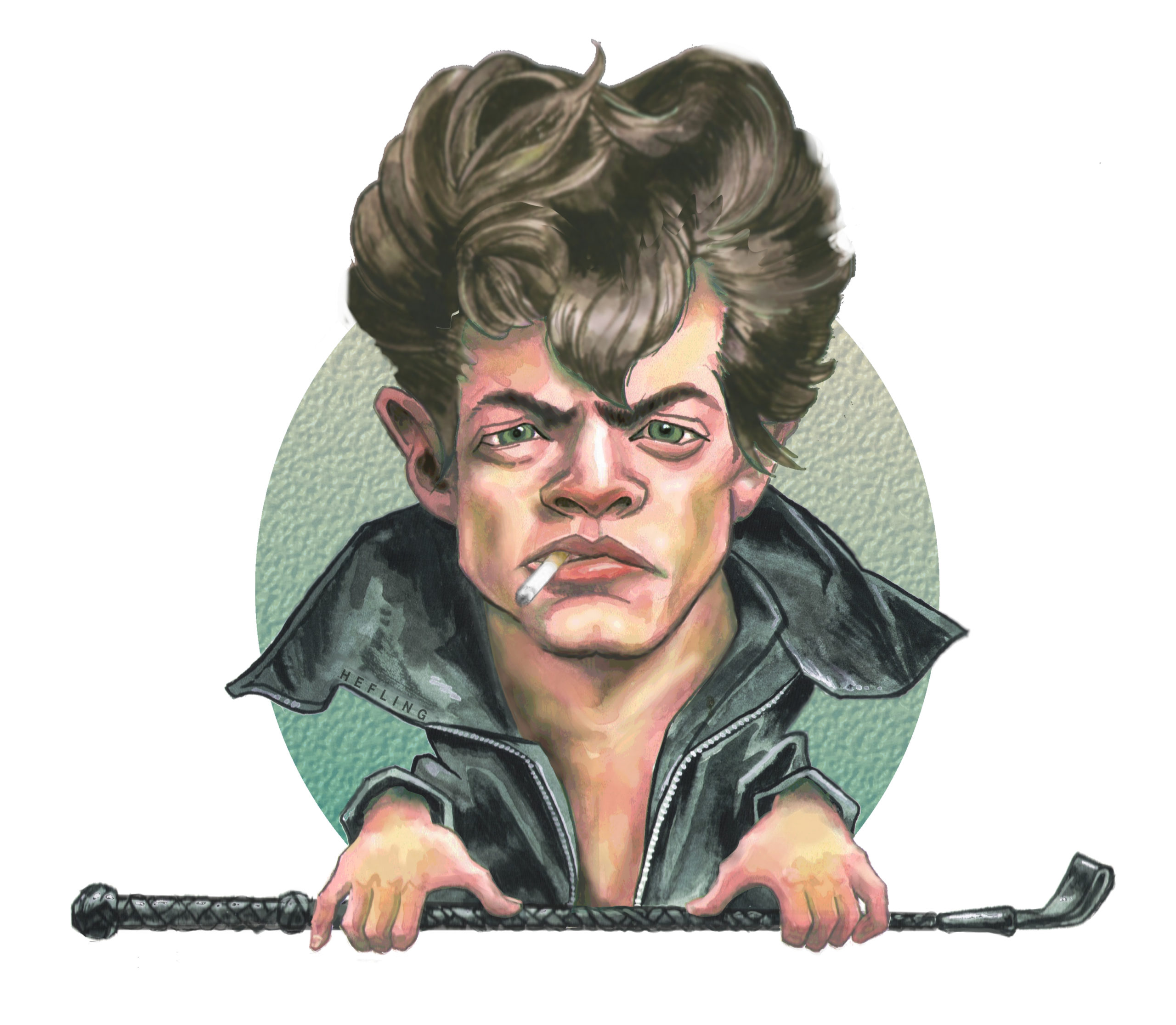 Mapplethorpe and Smith’s fortunes improved when he met Sam Wagstaff at a gallery show in 1972, then became romantically involved with him. By this time Smith understood Mapplethorpe’s attraction to men. As a wealthy curator and collector, Wagstaff exerted significant influence on the art world. Mapplethorpe was 25 and Wagstaff was fifty when they met. The former assisted the latter in fulfilling his repressed kink sexuality, while Wagstaff, who was connected to New York’s elite, funded both Smith’s and Mapplethorpe’s artistic endeavors. Journalist Jerry Portwood wrote in 2014: “Sam Wagstaff was a handsome, charming high-society figure who could have done anything, but decided to leverage his money and privilege to shape modern American culture and make Mapplethorpe a star.”
After Mapplethorpe had participated in and photographed gay kink sexuality for a few years, his knowledge of the subculture piqued the curiosity of Wagstaff, who was eager to try it out. Mapplethorpe had begun exploring photography using a simple Polaroid Instamatic camera, but Wagstaff bought him a Hasselblad large-format camera that produced big, square negatives and allowed him to create crisper, more detailed images that could be reproduced at a larger scale while maintaining their visual integrity.
Two factors helped Mapplethorpe create public acceptance for his S/M photography. The first was that he actively participated in the S/M subculture and understood the emotions associated with its practices, so his subjects felt comfortable with him. As Smith wrote in her memoir of her youth and her relationship with Mapplethorpe, Just Kids (2010): “Robert was not a voyeur. He always said that he had to be authentically involved with the work that came out of his S&M pursuit.” The second factor is that Mapplethorpe’s photographs featured both men and women, widening their appeal.
It was this diversity and dignity that integrated depictions of S/M into his other work—such as the starkly lit images of both flowers and celebrities—and created an immense fascination with his photos. Mapplethorpe’s entire portfolio was based on classical beauty, elegant composition, and mastering the manipulation of light and shadow. Each black-and-white photo establishes a fluid, ethereal motion, whether the image is of Arnold Schwarzenegger flexing, a Black man’s gentle movement in a blank space, a lone orchid before a high-contrast background, or the kink of tough-looking leather men whipping and bending.
Mapplethorpe’s S/M performance art simulations cloud the idea that the pain inflicted by the practices shown could vary from nonexistent to torture. On the vanilla end is his photography of Peter Berlin, shot while Mapplethorpe was in San Francisco. If the S/M images were a reality show, Peter Berlin would be a cartoon. With his eternal Dutch-boy good looks, Berlin wandered San Francisco’s streets for decades riffing on various bawdy identities, one day a French sailor, the next a farm boy in see-through overalls, the effect of which was always heightened by his ample package. Author and editor Jack Fritscher, writing in Skin: The Hardon Magazine in 1981, opined that Berlin wasn’t like other blond men in leather, who often suggested a kind of Aryan androgyny. Any association of S/M with the self-appointed masters of the human race or with Nazism played no role in Mapplethorpe’s staging of S/M photographs.
Illustrating the ideas and tools of S/M involved no pain, only the representation of transgressive acts. In Brian Ridley and Lyle Heeter (1979), the eponymous leather-clad figures employ S/M to define the roles that men (and women) play through their accessories. The parts of master and slave, together with all the gear they wear—chains, shackles, leather jackets, collars and caps, chaps and boots—visually support the acts they engage in. Mapplethorpe introduces S/M not only artfully but also as an alert to the American public that this subculture is alive and real. For example, the chains, reminiscent of a man and a dog in how they are positioned, aren’t used just to take a walk but to engage in torture or a simulation thereof that emphasized æsthetic form, symmetry, and classical beauty.
A source of metaphor in Mapplethorpe’s work was the intersection of pain and religion. Recently discovered Mapplethorpe photos include Dominick and Elliot (1979), in which the figures practice bondage as Dominick hangs suspended upside down by his ankles while his arms are pulled forward by leather straps around his wrists. His figure forms an inverted cross, his head touching the floor. A thick, heavy chain dangles from Dominick’s crotch down his stomach and chest, leading to a leather collar around his neck. The dominant Elliot stands, reaching between Dominick’s thighs and exerting a tight grip on his testicles. The drama of the two men symbolizes St. Paul’s wish to be crucified in a way that does not represent Jesus’ death. Poet and playwright Paul Schmidt wrote in his introduction to Mapplethorpe’s “X Portfolio”: “In a secular age, these images are all we have left. Here are the images of our modern martyrdom: our Scourgings, our Crownings with Thorns, our Crucifixions.” Yet there is joy in the image because Mapplethorpe saw S/M as an innocent activity. “For me,” he said, “S/M means sex and magic, not sadomasochism. It was all about trust.”
By the 1980s, Mapplethorpe and Wagstaff had both contracted HIV that developed into AIDS. The former shot images of the mysterious effects of the disease, including those strange purple lesions called Kaposi sarcoma. These photographs are rarely seen today (none of them can be found on the internet), but for me they were perhaps the most painful images in all of Mapplethorpe’s work. After witnessing these images in the 1980s, as well as a tsunami of black and blue balloons in a San Francisco Gay Pride parade, my heart flooded with emotion and worry, which would become a frequent occurrence as some of the best of the best people I had befriended quickly succumbed to the unyielding pain of various infections.
Mapplethorpe, Smith, and Wagstaff helped open the closet doors for the LGBT community by transforming the face of 1970s art, starting a trend that changed attitudes toward S/M photography as an art form from marginal at best to being worthy of display at the top art museums worldwide, evoking the joy and pain of American sexuality. Mapplethorpe mastered photographic techniques, employing a range of subjects and objects and capturing them with flawless precision through meticulous staging, a process that required copious time and effort. He showed the photographers who followed him how to capture uniquely intense, monochrome illumination: silvery, archaic light that makes everything—a face, a flower, an ass—weighty and still, like classical sculpture.
Matthew Bamberg is the author of Digital Art Photography for Dummies and recently published a short story collection titled Coconut Grove Chronicles (KnowNot Florida Press).