

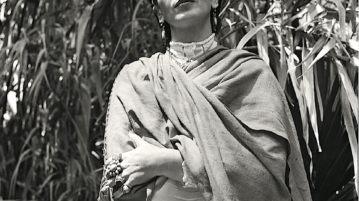
Discovering Gisèle Freund, Photographer
A pivotal moment in her personal and professional life occurred in 1935, when Gisèle Freund met the feminist writer and publisher Adrienne Monnier at her renowned bookstore, La Maison des Amis des Livres.
More
A pivotal moment in her personal and professional life occurred in 1935, when Gisèle Freund met the feminist writer and publisher Adrienne Monnier at her renowned bookstore, La Maison des Amis des Livres.
More
Conversations with Sarah Schulman offers a wide range of opinions and biographical details. The writer discloses important biographical material about the current state of her health and about the influence of such literary legends as Audre Lorde and Grace Paley.
More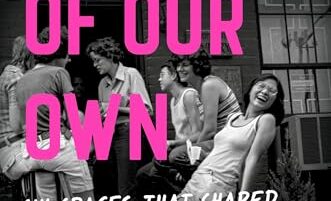
FOR LESBIANS of a certain age, reading June Thomas’ A Place of Our Own may bring on a wave of nostalgia, especially the parts about the 1970s and ’80s. Thomas has written a breezy yet substantial history of six types of spaces that have been important to our culture: lesbian bars, feminist bookstores, the softball diamond, lesbian land, feminist sex-toy stores, and vacation destinations. Each sort of space has its own unique vibe, but they all share a history of lesbians trying, and often failing, to make it in a heteronormative capitalistic society while prioritizing lesbian feminist ideals. The efforts were often heroic and the results transformative in the lives of the women who spent time in these spaces.
More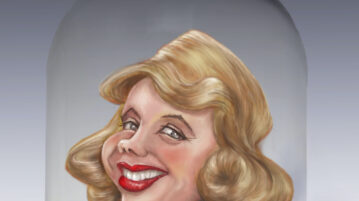
SET IN 1953 and published ten years later, Sylvia Plath’s autobiographical novel The Bell Jar is widely regarded as a masterpiece, a female coming-of-age story like J. D. Salinger’s classic The Catcher…More
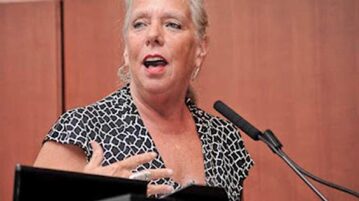
Amber always managed in her activism to “say out loud what everyone had agreed not to notice.” She constantly called for a “new revolution” that included the sexual desires that so many experience with shame and feel forced to keep secret. She insisted that we embrace “our most dangerous desires” and “fight for a world that values human sexual possibility without extracting a terrible human price.” She strove “to create a movement willing to live the politics of sexual danger in order to create a culture of human hope.”
More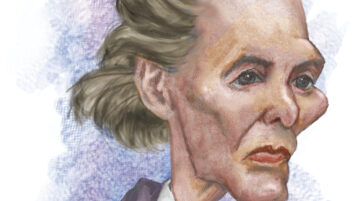
Hilda Doolittle was born in Bethlehem, Pennsylvania, to Charles Doolittle, a math and astronomy professor at Lehigh University, and Helen Wolle Doolittle, a painter and musician. Charles Doolittle was a widower who brought two sons into the household. In addition to these half-siblings, Hilda had three brothers. She enjoyed a happy childhood and loved the natural beauty of her hometown, which was then a small rural Moravian community. When Hilda was eight, the family moved to Upper Darby, PA, so her father could teach at the University of Pennsylvania. Her life continued smoothly as she excelled in high school, studying Latin and the ancient Greeks, and got into Bryn Mawr College.
More
[McKenzie] Wark’s latest memoir, Love and Money, Sex and Death, returns to letter-writing as a way of revisiting past lovers and past friends, and those who fall somewhere in between. She turns the idea of a traditional, linear memoir on its head, using hindsight as a tool to reapproach, and in some cases recover, past relationships: “Changing sex edits your relation to a lot of things. Including history.”
More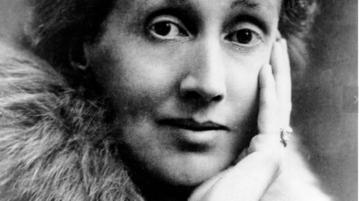
Two revolutionary works of literature by queer women writers, and lesbianism would once again become the subject of intense dispute. Published within three months of one another, Radclyffe Hall’s The Well of Loneliness (July 1928) and Virginia Woolf’s Orlando (October 1928) both deeply challenged the gender conventions and sexual mores of their time.
More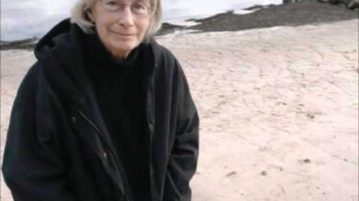
By David Masello: Oliver was never afraid to use certain words in her poems. Cover your ears, for you may be offended. Her language includes nouns and adjectives like beautiful, love, beloved, prayer, loneliness, God, holy, and heaven.
More
Moby Dyke is not just the slice of Americana that all road trips provide, nor just a portrait of the splintering of sexual identity in the homosexual community; it’s also glimpses of a writer’s past. Indeed, the sheer specificity of those memories produces its best prose, particularly when the author returns to the state in which she was raised.
More