

A bimonthly magazine of
history, culture and politics.

A Life on Trial
Padlock IconThis is a premium subscriber article. If you are already a premium subscriber and are not seeing all of the article, please login. If you are not a premium subscriber, please subscribe for access to all of our content.

0
Published in: March-April 2005 issue.
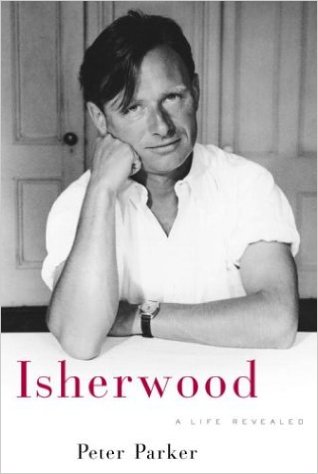
 

IsherwoodIsherwood: A Life Revealed
by Peter Parker
Random House. 815 pages, $39.95


DIARIES ARE curious things. They are private records, but when they document the lives of public figures, those divisions become murky. In the case of Anglo-American writer Christopher Isherwood (1904–86), whose diaries exceed a million words—hundreds of thousands of which have already been published—they can be downright damning. And so they often are in a new biography that will, for better or worse, be the definitive biography of one of the most important literary chroniclers of the 20th century.

The acknowledgments alone show the extent of Parker’s research. It took him a dozen years to write this book, which is informed by interviews, scholarly works, and access to volumes of unpublished material. Parker notes that Isherwood’s surviving partner, the artist Don Bachardy, “courageously signed away any right of approval of the text,” but “he felt unable to give the book his endorsement when he finally read it.” Having read the book, one can imagine that Bachardy wishes he had not been so generous or so trusting. Bachardy has shepherded two volumes of Isherwood’s diaries into print in almost unabridged form (under the editorship of Katherine Bucknell), much to the chagrin of more than a few friends, former friends, and associates. Parker quotes Bachardy about the publication of the diaries saying, “I think it’s a little presumptuous to step in and shield people from the truth, and that’s also my attitude as an artist. … I believe in the truth as far as I can make it out.” But here the “truth” hurts—everyone. The private Isherwood has withstood more than his share of public airing, and he’s no longer around to explain himself. Parker treats every entry as a deep revelation of personal failings, without admitting that often a diarist is just recording a casual reaction or a moment of simply lashing out.

So, what is “revealed” in Parker’s book? That Isherwood liked boys; that he wasn’t always nice to his mother; that he had a strained relationship with his idiosyncratic brother Richard; that he tended toward laziness and often drank to excess; that he was sometimes vicious in hisHefling ISHERWOOD (1) diaries, sometimes anti-Semitic, often petty or vindictive. Also, that he was a good writer—occasionally very good—but that most of his best work was completed before he made the mistake of leaving England for the U.S. in 1939—an old chestnut of Isherwood studies, and one that Parker does nothing to challenge.

The book is divided into two parts, “England Made Me” and “Becoming an American,” which is nicely symmetrical but doesn’t do justice to the complex evolution of Isherwood’s life or work. Parker pays more attention to the first 25 years of Isherwood’s life than to the last 25, which makes for slow going in the first 150 pages. Also, the chapters are numbered, not titled, which seems especially unhelpful in a book as long and detailed as this one.

Parker provides some insights into Isherwood’s literary friendships and associations, especially with his school chum and lifelong friend Edward Upward. That relationship turns out to have been at least as significant as the better-known association with W. H. Auden. Isherwood relied heavily on Upward’s feedback on his work, and he was tirelessly supportive of Upward, providing much needed encouragement when his friend had all but given up on his writing career.

The details of Isherwood and Auden’s early friendship and sexual activities are explored, and Parker determines that Auden was “the more loving one,” as the poet wrote about a different lover. Their relationship, which started as casually sexual and professionally collaborative, became much more a study in contrasts, with Auden settling in New York and moving toward Christianity while Isherwood embraced Los Angeles and Vedantism.

The Berlin years were, of course, central to Isherwood’s life and reputation, not to mention his bank account. Parker traces the evolution of the Berlin Stories carefully, detailing the transition from book to stage play to Broadway musical to film. This is obviously Isherwood’s calling card, his claim to fame, but Parker doesn’t much explore what it meant to Isherwood to have peaked so early or to have achieved what he did in forms so influenced by the talents and input of others. The American Isherwood was clearly a self-conscious effort to dissociate himself from his identity as “Herr Issyvoo,” but that never really proved possible.

Parker insists that Isherwood was an unkind son, accusing him of all manner of petty and not-so-petty meanness wherever his mother was concerned. Kathleen represented the past and Mother England for Isherwood, whose whole adult life was spent in flight from both England and his mother. Curiously, though, Parker quotes a rather sympathetic and loving letter from Isherwood to Kathleen written in October 1939, in which he takes responsibility for his past mistreatment; but Parker offers almost no comment about this aspect of the complex mother-son relationship. There is no mercy from Parker’s bench.

Likewise, Isherwood’s sexual life is on trial here, and Parker almost always depicts it as frivolous or scandalous. On a couple of occasions, when Isherwood has an important personal breakthrough as a result of a sexual liaison, Parker is dismissive of any possible significance. For example, in his only heterosexual affair, according to Parker, Isherwood “was narcissistically aroused by the fact that she found him attractive.” And yet, is it so unusual for someone to be aroused by being found attractive? In a similar vein, Parker discusses a fling Isherwood had with a young man named John Andrewes. A few months after the liaison, Isherwood recorded some reminiscences about it in his diary: “Waking up at night in the Hotel Voltaire with John in the neighboring bed and wondering: ‘what on earth is the matter with me? … I feel so strange… It’s only that I’m happy.’” Comments Parker, “The surprising thing about this episode with Andrewes is that Isherwood should later look back upon it as an epiphany, rather than the brief romance it appears to have been at the time.” Can’t a brief romance could lead to deeper self-understanding?

A couple of years ago, Isherwood’s reconstructed diaries from the 1940’s and early 50’s were published as The Lost Years. The book received some scathing reviews, including a few particularly homophobic reactions to its candid sexual content. Discussing the “casual sex” Isherwood pursued in those days, Parker notes that “when these diaries were published, a close friend of Isherwood commented that the only two men he knew who had slept with Isherwood ‘laughed out loud’ when they read his preening self-portrait.” The endnote cites the source of this dubious remark as “Anon to PP, 9/5/2002.” Including such a comment anonymously renders it hearsay and mere gossip or hearsay, which the judge in this case is happy to allow.

Parker has strong opinions on lots of topics, which he sprinkles liberally throughout his book. In one instance, he discusses two of Isherwood’s Hollywood jobs and offhandedly disparages two major literary works. He says that Evelyn Waugh’s satirical novel The Loved One was “hardly in good taste” and that Carson McCullers’ Reflections in a Golden Eye was “one of [her]least satisfactory novels”—opinions with which many literary critics would beg to disagree. Later, he discusses Isherwood’s friendship with writers like Armistead Maupin and James White. Maupin is quoted as saying that Isherwood “always had a sweet gift of making the young feel comfortable. … He was always tremendously curious about everything that was going on.” Parker concludes the section with another telling inference: “In this way Isherwood and Bachardy’s increasingly wide circle of acquaintances grew younger and younger.” Bachardy, I would point out, is less than a decade older than either White or Maupin, but Parker turns both Isherwood and Bachardy into dirty old men.

Parker’s biography takes it for granted that Isherwood’s later career wasn’t nearly as significant as the earlier years. His damning of the later works is based on contemporary reviews, but he fails to put those critical reactions into the homophobic context of their day. He spends almost an entire page citing negative reviews of Down There on a Visit (1962), saying that “the book struck most critics as simply repulsive,” without pointing out that critics were mostly reacting to its openly gay subject matter and not the book’s critical merit. He does the same thing with Isherwood’s masterpiece, A Single Man (1964), though at least he admits that it’s a good book, describing it as “Isherwood’s most profound and most skillfully written book, one that seems to be all surface, but is properly engaged with that most important of subjects: what it is to be alive.”

Parker spends some time on the emergence of Isherwood as an important figure in the gay rights movement. In the 1970’s, especially after the publication of his memoir Christopher and His Kind, Isherwood became the gay uncle of the movement, and comments from Maupin and Edmund White, in particular, support this view. Maupin’s affection for Isherwood is well known, but one wonders whether he would recognize Parker’s version of his mentor and friend.

Parker’s opus ends with an “Afterword” in which he tries to justify his overall portrait of the artist. Assessing Isherwood’s reputation, which he says “suffered something of a slump after Isherwood’s death,” Parker concludes: “almost everything Isherwood wrote bears the clear stamp of his personality, and taken together, both the good and the bad, his books constitute a sort of Bildungsroman, describing the long journey of a man who was always learning about himself and the world in which he moved.” Finally, on the last page, he describes the Isherwood that many of his friends and fans will recognize, the one we appreciate for his honesty, his relentless self-examination, his determination to grow as a man, as a writer, and as a partner. Isherwood was his own harshest critic, but instead of acknowledging this, Parker himself takes on that role himself.

Calling this biography “a life revealed” is inaccurate at best; perhaps “a life examined” would be closer—or even “a life on trial.” I’m not sure whether the biographer’s job is to be judge and jury, but Parker assumes both roles with disconcerting ease.

Chris Freeman is co-editor, with James Berg, of The Isherwood Century (2000) and Conversations with Christopher Isherwood (2001).

Share