

A bimonthly magazine of
history, culture and politics.

More Than a Sanskrit Sex Manual
Padlock IconThis is a premium subscriber article. If you are already a premium subscriber and are not seeing all of the article, please login. If you are not a premium subscriber, please subscribe for access to all of our content.

0
Published in: September-October 2016 issue.


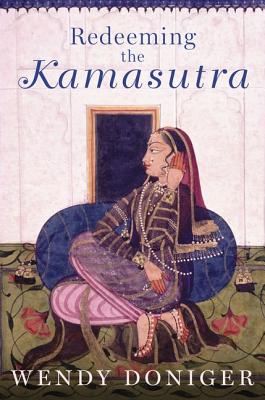
Redeeming the KamasutraRedeeming the Kamasutra
by Wendy Doniger
Oxford. 182 pages, $24.95


I   HAVE TO CONFESS that I am exactly the naïve (perhaps prurient is more accurate) reader that Wendy Doniger has in mind for her concise yet scholarly study of the Kamasutra. In a dim corner of a bookstore, I have probably leafed through an illustrated edition of the notorious Indian classic, more interested in the contortionist sex poses than the text itself. In any case, I think of it as a catalog of sexual positions more than anything else.

But the Kamasutra is far more than that, and no one could be a better authority for exploring its literary history, cultural context, and sexual politics than Wendy Doniger, the Mircea Eliade Professor of the History of Religions at the University of Chicago, and the co-author of a 2002 Oxford University Press translation along with psychoanalyst Sudhir Kakar. Doniger translated from the original Sanskrit text, while Kakar translated the Hindi commentary. Their translation was widely praised as more accurate than the original 1883 English translation by Sir Richard Francis Burton, which was widely reproduced, abridged, bastardized, and translated (including, ironically, into Hindi). Doniger’s translation, as she explains, brings back to life the voices of women in the original text and highlights its broader dimensions as a gentleman’s guide to the “art of living.”

Kama is the Hindu god of erotic love (similar to the Greek Eros). He is usually represented as a handsome, winged youth who wields a sugarcane bow strung with honeybees, shooting flower-arrows that inflame the passions. He personifies cosmic creation, and his name is synonymous with pleasure, love, and desire. The treatise (sutra) on kama was written in Sanskrit in the later part of the 3rd century CE by one Vatsyayana Mallanaga. The definitive commentary on it was written a millennium later by Yashodhara. Nothing more is known about either of these philosophers. The ten chapters on sexual advances and 64 sexual positions are the best known part of the Kamasutra, but they comprise just one of seven sections. The others cover topics such as: the general education and lifestyle of the wealthy man-about-town; acquiring a wife; seducing other men’s wives; wifely duties and conduct; handling courtesans; and magical treatments for flagging sexual power (i.e., the Viagras and penis enlargement treatments of the 3rd century).

As Doniger points out, the Kamasutra positions itself in a line of historic sutras—now lost texts on pleasure, as well as others on Puruṣārtha, the four Hindu goals of human life: Dharma (ethics and law), Artha (work and wealth), Kama, and Moksha (liberation and release). Doniger examines the stylistic and thematic interconnections of the Kamasutra and two of its predecessors, an Artha Shastra from the 1st century CE attributed to Kautilya and a Dharma Shastra written by a Manu in the late 2nd century. (Shastra means a treatise on a particular science or discipline.) These other treatises dealing with statecraft, war, spies, and self-discipline influenced the broader aims of the Kamasutra, which instructs the wealthy man on the aforementioned topics related to household management, the seduction of women, and the war of the sexes. Vatsyayana, however, often veers away from the conservatism of prior texts by advocating pleasure for its own sake and adultery not just to exact vengeance against one’s enemies.

Doniger highlights the passages that show a particularly modern sensibility about attending to women’s pleasure, orgasm, and even the G-spot in order to maintain a wife’s love. Yet she has to admit that this is presented in a general cultural context of a “rape mentality.” After all, four of the eight legal types of marriage are: tricking a virgin into eloping and then deflowering her; deflowering her when she’s drunk; doing so when she’s asleep; or kidnapping a girl, despite her screams, after murdering her male relatives (the “ogre’s marriage”).

Doniger devotes one chapter to the Kamasutra’s discussion of atypical gender roles, the “third nature,” and same-sex behavior. In general, the text presents conventional views of male and female nature. Man is active and aggressive; he should overpower (or rape) a woman, whose nature is passive, delicate, timid, bashful. There are many passages describing how a man should slap a woman to incite her desire. Even when the woman enjoys this, and her passion is inflamed, the modest woman should at least feign resistance, but eventually give in with gusto. The man should be on top in sex. However, the text and its commentary acknowledge the possibility of a certain gender inversion, as when the woman can cast aside her nature (briefly) to do the slapping or be on top (in the “perverse” or “reversed” position).

This fundamentally binary view of sex is also at work in the text’s discussion of men engaging in same-sex behavior. In general, traditional Hindu culture prizes marriage and reproduction while stigmatizing male homosexuality under the term kliba (“defective male”). The Kamasutra does not use this term, instead referring to men of a “third nature” who appear in two gendered forms, as female or male. The one of a feminine nature imitates women in dress and character, engages in oral sex, and makes a living as a courtesan. The text is probably referring to the ancient and still present phenomenon of the hijra, males of the lowest caste, who dress as women, collect alms for blessing marriages and births, and engage in sex work. Some of them undergo nirvan (ritual removal of the genitals), so they were referred to as “eunuchs” by the British. More recently, the hijras have adopted the Western concept of transsexualism.

The Kamasutra offers a rather original description of the male form of “third nature” men. Doniger likens it to a closeted homosexual. This type of man appears male and is usually a masseur by profession and tries to seduce clients into receiving a blow job. The text engages in a lengthy description of the technique and mentality of the masculine “third nature” man. Elsewhere it warns of mistaking a gentle or timid bridegroom for a “third nature” man, when he is simply trying to win over his virginal bride. While these discussions of same-sex behavior are not extensive, they were quite novel for the 3rd century. The Kamasutra also briefly describes female same-sex behavior (with vegetable dildos) between women of the harem who are deprived of male attention. There are some fleeting descriptions of what might be labeled as bisexuality.

Doniger’s task of “redeeming” the Kamasutra has two main prongs. The first is demonstrating that it is more than just Sanskrit porn (which she does ably in her examination of its literary lineage and the subtlety of its gender dynamics). The second, which is perhaps the more challenging, is to raise the question: how did India develop into a sexually conservative society despite the ancient Kamasutra and its famous erotic carvings (such as the 10th-century Khajuraho temples)? Doniger repeatedly notes the two dominant, opposed paths of sexuality in Hinduism: marriage, children, and family life versus ascetic celibacy. Homosexuality didn’t fall into either of these but occurred discreetly on the side (as the Kamasutra described). It wasn’t explicitly criminalized until British rule when the Indian Penal Code of 1860 made “carnal intercourse against the order of nature” punishable by life in prison. More broadly, British Protestantism tilted Indian culture toward prudery. Doniger notes that the Anglicized Indian elite adopted this mindset, which is still evident in the Board of Film Censors’ impact on Indian film and arts.

The Kamasutra is entangled in these sexual politics. As noted earlier, it was rediscovered through an 1883 English translation sponsored and annotated by Sir Richard Burton. In order to circumvent British censorship laws, Burton published it “privately” under the cover of a scholarly society. It wasn’t legally available to the British or American public until 1962! Burton was a diplomat, explorer, and ethnographer who was especially interested in sexual diversity and was also responsible for translations of The Arabian Nights and several essays on “pederasty” (including his research on the penis sizes of diverse ethnic groups). Burton’s Kamasutra was an instant sensation, but the Victorian Indian elite found the text an embarrassing reminder of a lascivious past.

Indian women and gays continue to live under these complex layers of sexual prudery. Indian friends tell me their parents still conflate being “a gay” and hijras, despite the Kamasutra’s ancient distinctions of gender and sexuality. Gay and lesbian Indians have only recently come out of the shadows and engaged in pitched battles for civil rights. The Delhi High Court in 2009 ruled that the criminalization of same-sex behavior was unconstitutional; however, the Indian Supreme court reversed this decision in 2013 and left the issue to the Indian Parliament, which has declined to consider decriminalization. This February, the Indian Supreme Court agreed to hear an appeal of its prior decision. We can only hope, along with Doniger, that in this ongoing battle the power of Kama will finally prevail.


Vernon Rosario is a child psychiatrist and Associate Clinical Professor in the Department of Psychiatry at UCLA.

Share