
What Happened to Him as a Child?
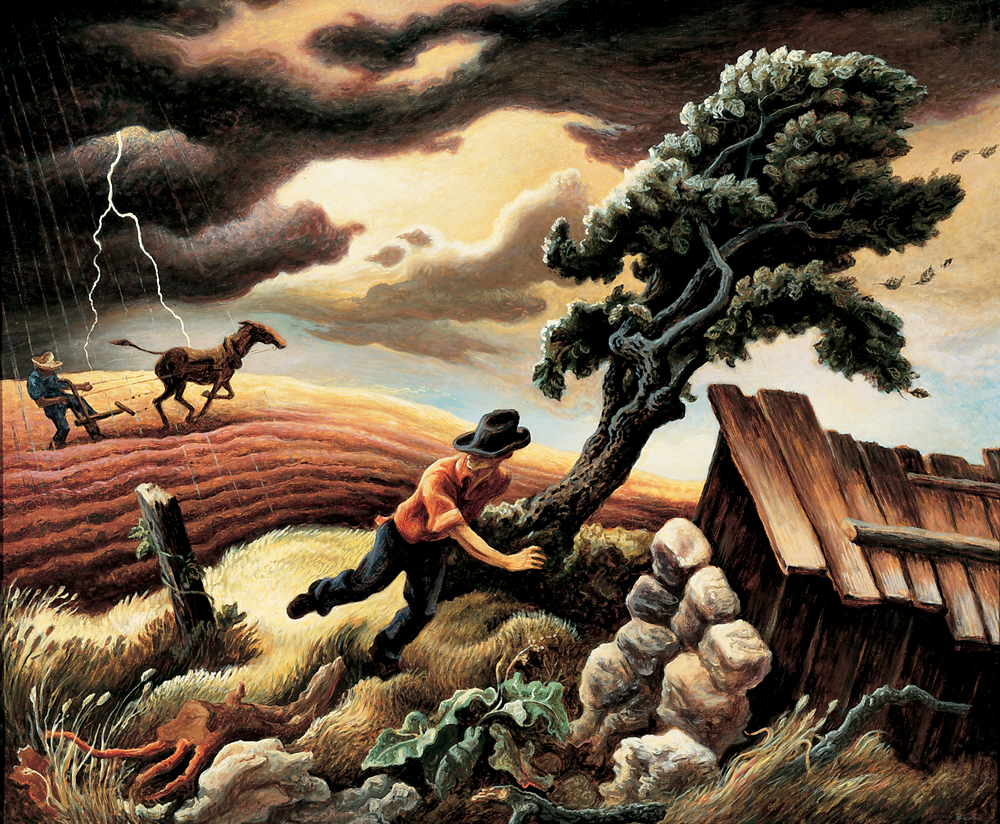
For many people, these paintings seemed to expose the true, animal nature of humanity, which, after the devastation of two world wars, could no longer be viewed as civilized or a force for good.
More
For many people, these paintings seemed to expose the true, animal nature of humanity, which, after the devastation of two world wars, could no longer be viewed as civilized or a force for good.
More
ALTHOUGH David Wojnarowicz has been the subject of many essays, studies, and an excellent biography by Cynthia Carr, Chris McKim’s film is the first feature-length documentary to examine his life and work. The film does not have a narrator but makes extensive and effective use of the many tape journals that the artist recorded starting in 1976. The result is an audio collage that tells his story along with images of his work, and of the artist himself, that fade in and out in kaleidoscopic fashion.
More
BY THE TIME animal painter Rosa Bonheur (1822–1899) died, she had been one of the most famous and financially successful establishment artists in France for half a century. Railway tycoon Cornelius Vanderbilt had bought the canvas regarded as her masterpiece, the 8’ x 16’ Horse Fair in Paris (1853), for the Metropolitan Museum of Art. Wealthy collectors on both sides of the Atlantic had regularly commissioned canvases from her. …
More
PUBLISHED last year on the occasion of a major retrospective of Frida Kahlo’s work in the Martin- Gropius-Bau, Berlin, and Bank Austria Kunstforum, in Vienna, the Frida Kahlo Retrospective is accompanied by a coffee table-sized catalog. It is a stunningly beautiful book with glorious color and black-and-white illustrations.
More
Ron Athey, a beautifully illustrated catalogue raisonné in which his extensive œuvre is analyzed, comparing him to Jean Genet, Antonin Artaud, and Yukio Mishima. His papers have now been acquired by the Getty Museum, and a new catalogue, Queer Communion: Ron Athey, draws from these archives and includes his art, ephemera, performance notes, scripts, sketches, and both published and unpublished writings.
More
The big discovery for me was Simeon Solomon (1840–1905)— a name I didn’t recognize—who had two works in the Yale show: Babylon Hath Been a Golden Cup (pen and ink, 1859) and Bacchus (oil painting, 1867). With a little research, I found that Solomon, younger than the first wave of PRB artists, was considered an equal by his peers.
More
My research has turned up the fact that a number of paintings are of Rhode Islanders from past centuries. One striking example is an oil portrait of Christiana Carteaux Bannister painted by her husband, Edward Mitchell Bannister, in 1860. Carteaux Bannister was an abolitionist and a successful businesswoman who was part African-American and part Narragansett Indian.
More
Illusions of the Photographer: Duane Michals at the Morgan was a comprehensive retrospective at the Morgan Library & Museum, curated by Joel Smith, the institution’s groundbreaking first curator of photography. Michals’ photography epitomizes the conceptualist method—narrative and performed, illusionistic and dreamlike.
More
Gorey, who died in 2000 at the age of 75, was the author and illustrator of a hundred-odd darkly droll little picture books with titles like The Fatal Lozenge, The Deranged Cousins, and The Blue Aspic. Although he grew up in Depression-era Chicago and lived most of his life in Manhattan, first-time readers often assume he was a denizen of gas-lit London.
More
Rise Up is timed to coincide with the 50th anniversary of the Stonewall uprising, but one thing you take away from it is that New York was hardly the origin of the gay rights movement. It really began in Los Angeles and then spread to Washington, D.C.
More